Introduction
Direct marketing offers a way for beef producers to potentially capture more value for their livestock. By cutting out parts of the supply chain – distributors, marketers – they may earn a larger share of the total selling price. It should be said that by cutting out these supply chain pieces, they are also taking on those roles themselves. Extra time and effort put into advertising, customer relations, sales and distribution can decrease the amount of time livestock producers have to care for their animals. Before understanding more about selling beef, read our article on how to get started in direct marketing.
When is a Beef Animal Ready for Harvest?
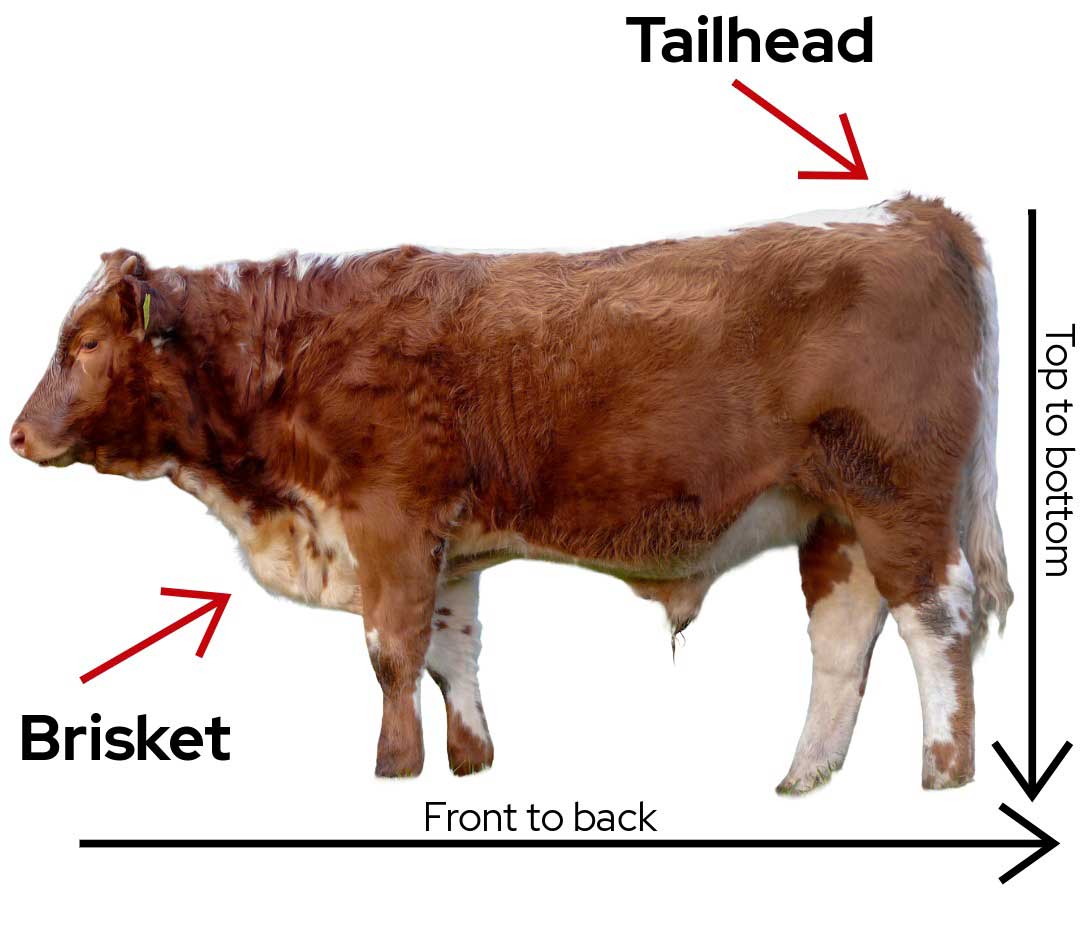
Factors such as breed, fat cover, muscling, age, diet, and weight all help determine when a beef animal is ready for harvest. All cattle deposit fat differently, so it is important to look at key locations on the animal to determine their readiness for market. Some of these locations include the brisket, ribs, flank, tail head, width of stance, and cod or udder regions. A rule of thumb is a body condition score of 7 will generally result in a carcass with a Choice quality grade.
Overall Muscling
Beef animals grow into their frame (bone) and grow muscle before depositing fat. A good, muscled animal would show it in the loin and rump. Muscling can be impacted by many factors, including genetics, nutrition, management style, breed, and age.
Fat Covering
Cattle lay on fat from front to back and top to bottom. This means the brisket will show signs of fat before the tail head does. If steers have been knife castrated, often they will show signs of finish with cod fat. On heifers, look at ribs and udder fat as additional indicators of finish.
Brisket
A visible distribution of fat into the brisket area (may have the appearance of a small ball). Finished animals should have low hanging briskets. Animals who are not finished will display pointed and narrow briskets, representing the lack of fat deposited into the brisket area. It is important to not let animals get overfinished and obtain excessive fat deposits as it will increase the yield grade of the animal.
Tail Head
The amount of fat deposited on each side of the tail head. Animals with an abundance of fat cover will have a square appearance over the top of the tailhead, when viewed from behind, with areas of fat on each side of the tailhead.
Age
Most cattle are fed a grain-based finishing diet and are harvested between 15-24 months of age. Grass finished animals are usually harvested between 24-30 months and generally take longer to finish due to a lower rate of gain. The age of harvest will vary based on feeding program, breed, and muscling.
Fabrication
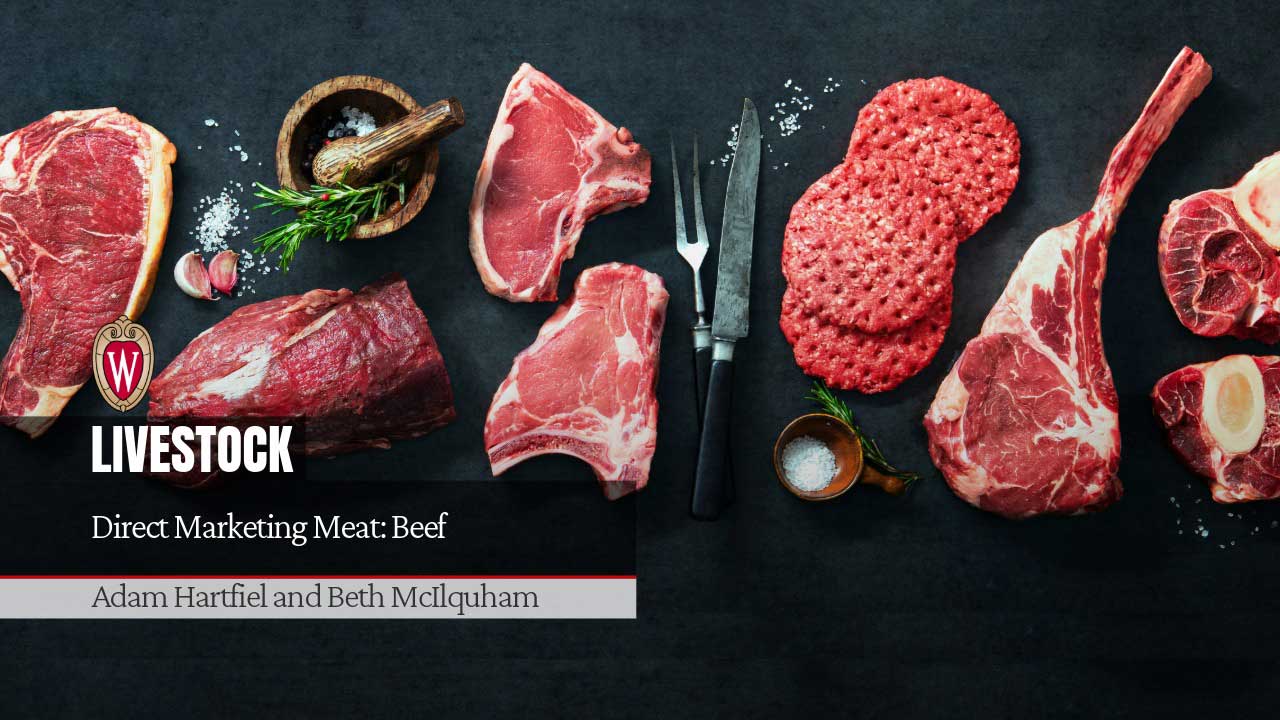
When fabricating (taking apart or breaking down a carcass), it is first cut into the primal cuts. These cuts divide the carcass into smaller pieces. The 8 primal beef cuts are chuck, rib, loin, round flank, plate, brisket, and shank. These primal cuts are further broken down into retail cuts, which are the types of cuts found in grocery stores or in meat markets.
For every one animal, there are two of each primal. For example, if a producer sells four quarters of the same animal direct-to-consumer, only two of those consumers can get a brisket. An entire animal cannot be processed into someone’s favorite meat cut.
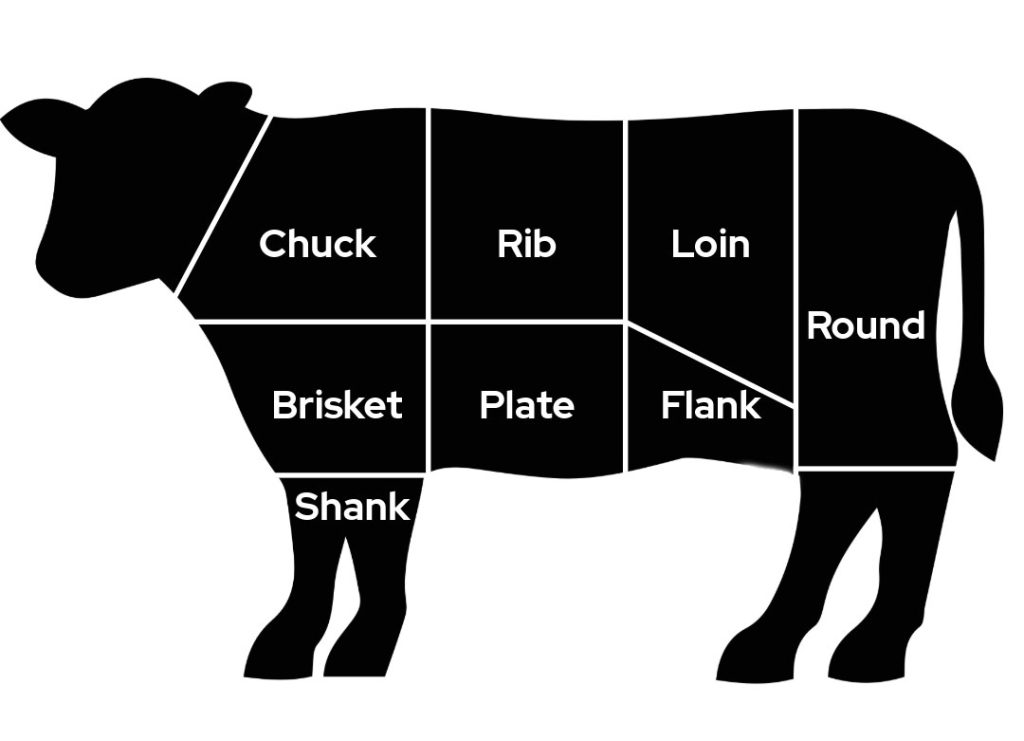
Beef producers who sell direct-to-consumers have options for how they would like to sell an animal. If selling in quarters and halves, let your customer know the options they have up front, so there are no surprises along the way.
How Much Beef Do I Take Home?
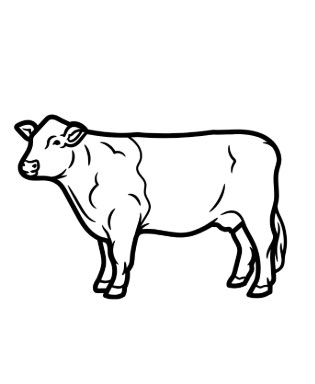
Unfortunately, 100% of the live weight of the animal cannot be used for edible products. If a steer weights 1200 lbs. prior to harvest (live weight), only about 744 lbs. of that animal will be there once the heart, lungs, and gastrointestinal tract are removed. This weight recorded immediately after harvest is called the hot carcass weight. After refrigeration, the carcass will shrink by roughly 3.5%, resulting in a chilled carcass weight of 718 lbs. The chilled carcass is then broken down into smaller cuts.
| Live Weight | Hot Carcass Weight | Chilled Carcass Weight | Take Home Product |
|---|---|---|---|
 1200 lbs |
 744 lbs |
718 lbs |
 481 lbs |
Boneless-closely-trimmed retail cuts refer to the portion of the carcass that remains after the excess fat and bones have been removed. What is left over is the take home meat. Total take home meat will depend on how much of the live animal you are committed to purchasing. A previously discussed 1200 lb. live animal will yield approximately 481 lb. of take-home meat. So, a customer that purchases a whole animal would expect to receive 481 lb. of edible meat. Note that customers who order bone-in products will have an increased take-home weight to account for the addition of bone.
| Take Home Meat Based on a 1200 lb. Animal | |
|---|---|
| Customer’s Order | Closely Trimmed Take Home Meat |
| Whole | 481 lb. |
| Half | 240.5 lb. |
| Quarter | 120.25 lb. |
Measuring Beef Quality
Beef quality is defined by quality grade and yield grade. Quality grade measures ‘how good’ the beef is. Yield grade measures ‘how much’ beef can be harvested from the carcass. The combination of quality grade and yield grade helps predict the taste and quantity of meat harvested from a carcass. Quality and yield grades can only be assigned by a USDA grader. Connect with your processing facility to see if this is an option for your product.
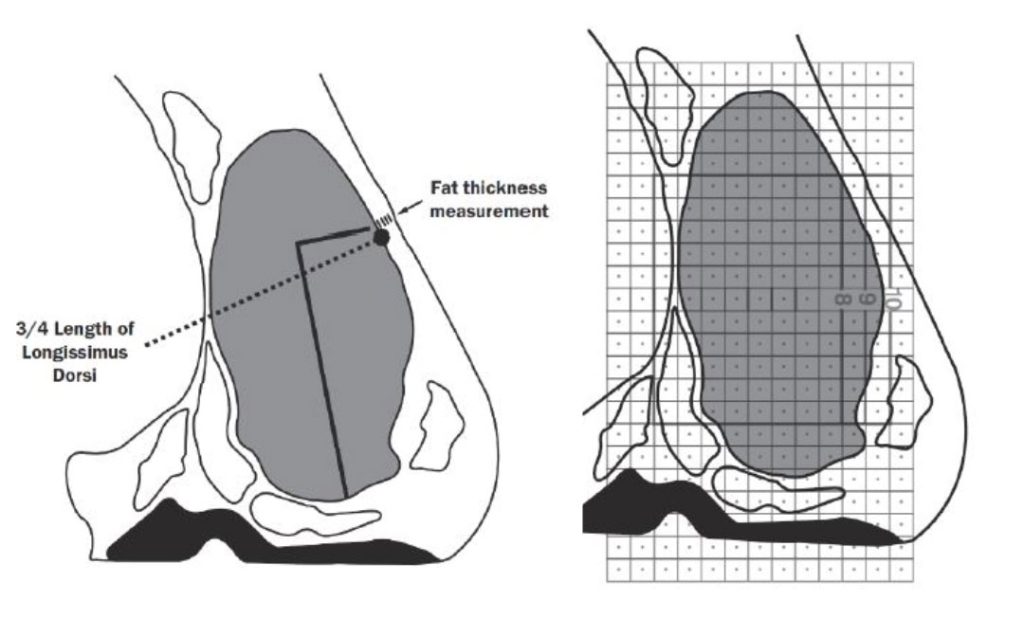
Measurements for both are taken after the carcass is harvested and split down the spine, creating two halves. Then, each half is ribbed (cut between the 12th and 13th ribs) and evaluated looking at the ribeye. Collecting this information can help producers advertise their product and/or give feedback on how their management practices affect meat quality.
Quality Grade
Quality grades are influenced by two factors:
- Maturity of the animal; and
- The amount of fat within the muscle (also called marbling or intramuscular fat)
Maturity is described by the letters A, B, C, D, and E, where A is younger (18-30 months of age) and E is older (over 96 months of age). The age of the animal is important to meat quality because as the animal ages, meat becomes tougher and less satisfying for consumers. It is important to note that cattle over 30 months of age generally have a much more difficult time earning a ‘Prime’ quality grade and may limit ability to sell bone-in cuts. Maturity can be determined by lean color and size, shape, and ossification (the process of cartilage tissue turning into bone) of the bones and cartilage.
| Quality Grade | Prime | Choice | Select | Standard |
|---|---|---|---|---|
| Consumer Perception (generalized) | 😊 | 🙂 | 😐 | 😕 |
Marbling is determined by the amount of fat laid within the muscle (seen as little white flecks in raw meat). This type of fat is important because it largely affects the consumer’s eating experience due to its flavor-adding qualities. Research has shown a positive relationship between the amount of marbling and consumer satisfaction. A marbling score refers to the amount of fat in the meat. This score is commonly described as “Abundant, Moderate, Modest, etc.” Meat with more marbling receives a higher marbling score and a more desirable quality grade.
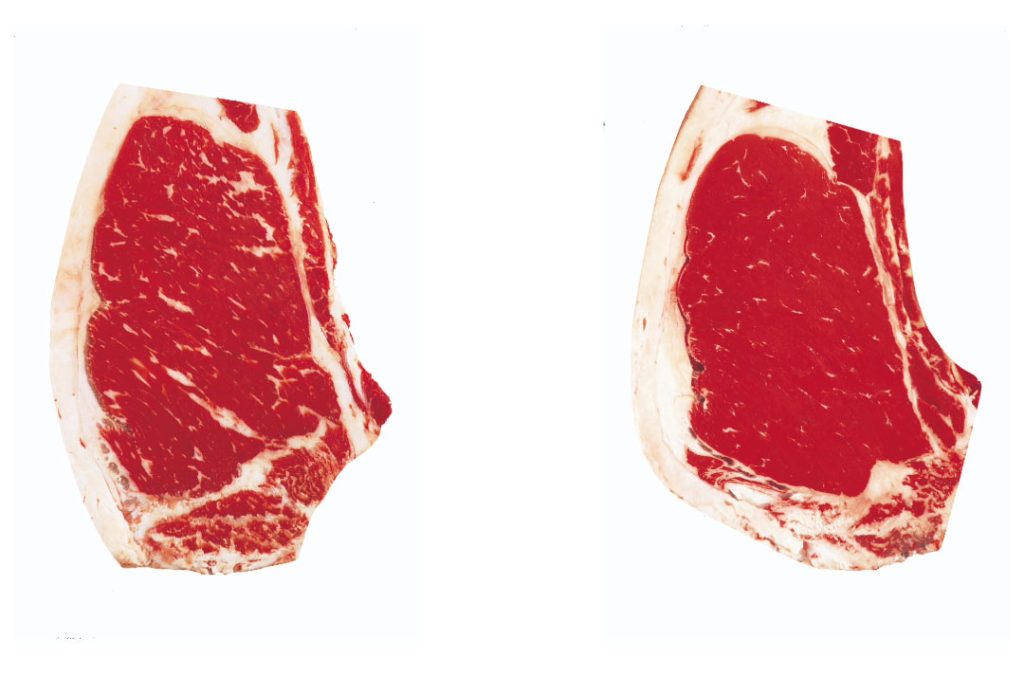
Final quality grades are determined by combining the maturity of the carcass and the marbling score assigned. Then, using the beef quality chart, a quality grade is given. For example, if a carcass is ‘A’ maturity and is given a marbling score of ‘Moderate’, it would receive a High Choice (Ch+) quality grade.
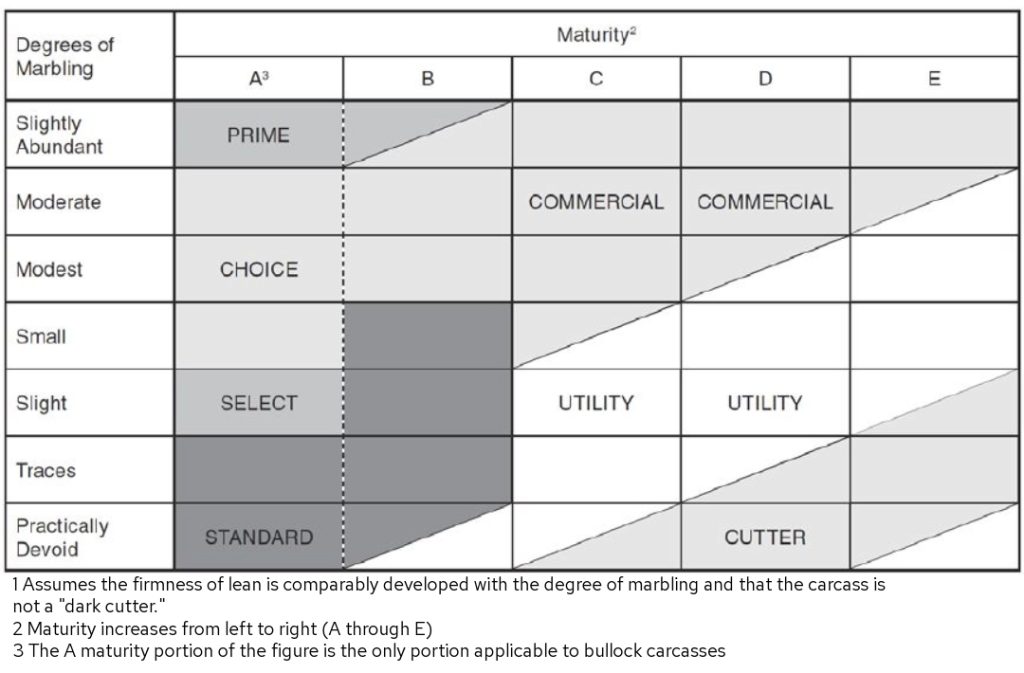
Source: https://www.ams.usda.gov/sites/default/files/media/CarcassBeefStandardsFigure1.pdf
Yield Grade
Yield grade measures the ‘cutability’ of the carcass. This describes how much product can be harvested from the carcass. Yield grade is measured on a numerical scale ranging from 1 to 5, where 1 describes leaner and more muscular carcasses, while 5 describes fattier and more “wasty” carcasses. This number is calculated through a yield grade equation.
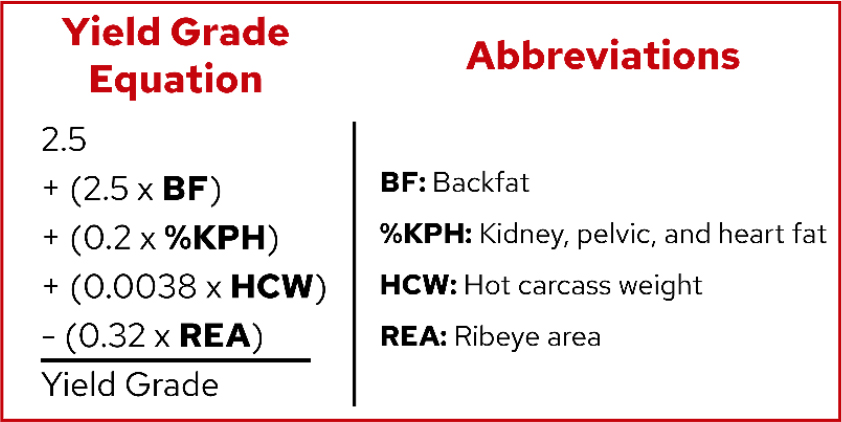
The backfat and ribeye area measurements are taken after the halved carcass has been ribbed. As the yield grade equation demonstrates, backfat has the largest effect on yield grade because it has the highest multiplier, followed by ribeye area.
Costs and Timeline of Processing
Live cattle will go through a series of steps to become a marketable meat product. The process begins with slaughter, where animals are stunned, bled, skinned, and eviscerated. The resulting carcass is then split in half down the spine and aged to develop its full flavor and tenderness (hanging time). Hanging time refers to the amount of time a carcass spends hanging in the cooler to achieve maximum tenderness and flavor. The hanging process allows enzymes to break down connective tissue, leading to a more desirable eating experience for the consumer. While hanging, a carcass will typically lose around 5-7% of its original hanging weight. This weight loss is attributed to moisture loss, also known as “shrink”. Research has suggested that the average amount of time a beef carcass should be chilled is around 10-14 days but will ultimately depend on the consumer and processors’ desired outcome. Hanging times may vary between processors, and they can explain options available to you.
It’s best to discuss the available options and their capabilities beforehand.
Finally, the carcass is cut (fabricated) into different products, ranging from large primal and subprimal sections to trim and individual retail-ready portions. The cuts you select, wrapping options, and specialty products (smoking, meat sticks, etc.) may also change the cost per animal. All these processes are done at a cost, and buyers and sellers should agree in advance on how they will be handled.
Processing costs will vary between processors but in most cases when purchasing an animal off its hanging weight, consumers will be responsible for paying:
- An agreed upon price per pound for the animal based off its hanging weight. ($/lb.)
- Cost from the processor to fabricate (cut) the carcass into desired cuts. ($/lb.)
- A set/flat slaughter fee, plus cost for labeling or other optional services like smoking, grinding, etc. if desired. ($/lb.)
*All costs and pricing may vary from processor to processor and is completely up to their discretion
For any beef producer, asking your processor questions about cutting costs, packaging options, delivery, and other associated costs is best practice. Understanding the whole process and costs beforehand makes it easier to communicate with your potential customers. Processors are there to provide you with tips, recommendations, and help you through the process to make your meat experience smooth and enjoyable.
Making “Cents” of Your Dollar
The Freezer Beef Pricing Worksheet and Grass-Finished Freezer Beef Pricing Worksheet are intended to help buyers and sellers determine sale prices for direct marketing wholes, haves, or quarters of grain-fed beef animals or grass-finished beef animals. These spreadsheets can be utilized to calculate estimated returns for beef producers, as well as for beef producers to communicate with their buyers on the economics of purchasing beef direct from the farm.
The Cornell Meat price calculator simplifies pricing for meat sold by the cut or carcass. This free tool helps producers ensure that they cover all input prices to make themselves a profit.
Summary
Recently, consumer awareness of where food comes from and interest in buying directly from producers has increased. As a result, many producers have begun selling beef directly to consumers. This producer-consumer relationship is a great opportunity to build trusting relationships with consumers and welcome more beef consumers.
Beef producers may be able to capture more value by selling direct-to-consumers. Understanding when an animal is ready for harvest and what a high-quality beef product looks like are the starting points to success. Be sure to follow national, state, and/or local rules and regulations when selling beef. For more information on direct marketing in Wisconsin, read our article on how to get started in direct marketing.
Authors

Adam Hartfiel
Regional Livestock Educator – Adam Hartfiel is Regional Livestock Educator for Adams, Green Lake, Waushara Counties. His educational programming has focused on beef cattle production and management.

Beth McIlquham
Beth McIlquham is a Regional Livestock Educator serving Crawford, La Crosse, Richland, and Vernon counties. She works alongside producers to provide livestock-related programming aligned with the needs of the area.
Published: January 28, 2026
Reviewed by:
- Bill Halfman, Beef Outreach Specialist at the University of Wisconsin–Madison Division of Extension
- Ryan Sterry, Regional Livestock Educator at the University of Wisconsin–Madison Division of Extension
References
- Beef Checkoff. (n.d.). Beef grading. Beef Research. https://www.beefresearch.org/resources/product-quality/fact-sheets/beef-grading
- Agricultural Marketing Service. (n.d.). Carcass beef grades and standards. U.S. Department of Agriculture. https://www.ams.usda.gov/grades-standards/carcass-beef-grades-and-standards
- Agricultural Marketing Service. (n.d.). Shields and marbling pictures. U.S. Department of Agriculture. https://www.ams.usda.gov/grades-standards/beef/shields-and-marbling-pictures
- Agricultural Marketing Service. (2017). United States standards for grades of carcass beef. U.S. Department of Agriculture. https://www.ams.usda.gov/sites/default/files/media/CarcassBeefStandard.pdf
- University of Tennessee Extension. (2022, May). How much meat to expect from a beef carcass (PB1822). University of Tennessee Extension. https://rutherford.tennessee.edu/wp-content/uploads/sites/200/2022/05/PB1822-How-Much-Meat-to-Expect-from-a-Beef-Carcass.pdf
- Iowa State University Extension and Outreach. (2013). Beef and pork whole animal buying guide. Iowa State University Extension and Outreach. https://www.extension.iastate.edu/wayne/files/documents/PM2076.pdf