Skip to content
UW Madison Crest

Livestock

Division of Extension

  • Topics
    • Meat
    • Beef
    • Beef x Dairy
    • Poultry
    • Swine
    • Small Ruminants
    • Decision Tools and Software
  • 🗓️ Livestock Events
    • Event Calendar
    • Driftless Region Beef Conference
    • Farm Ready Research
  • News
  • Programs
    • Beef Roundup Webinar Series
    • Master Meat Crafter Training Program
    • Small Ruminant Webinar Series
    • Wisconsin Youth Livestock
  • Articles
  • People
  • About
    • Our Impacts
  • Contact Us
Search
University of Wisconsin-Extension
Articles > Small Ruminants

Feeding Through 2024 Forages

Written by Livestock Program
Share
  • Share:
  • Share on Facebook
  • Share on X (Twitter)
  • Share via Email
  • Copy Link

Copied!

Video Contents

Video

Introduction

About this video

Key Points


See all Small Ruminant Webinar Series videos


Introduction

During the January 2025 Small Ruminant Webinar, Dr. Garland Dahlke, research scientist with Iowa State University Extension and Outreach, discussed how wet growing and harvest conditions can significantly reduce forage quality and alter feeding strategies for sheep and goat producers. Using forage samples from a weather-challenged production year, Dr. Dahlke demonstrated how delayed harvest, rain exposure, and high-moisture baling affect nutrient availability, intake, and overall feeding costs. 

About this video

A central theme of the presentation was that forage energy is often the first and most severely affected nutrient when weather interferes with hay production. Losses of sugars and other non-fiber carbohydrates, combined with reduced fiber digestibility, can limit animal intake and performance—even when crude protein levels appear adequate on a forage test. These challenges are especially important during periods of high nutrient demand, such as late gestation and early lactation. 

Dr. Dahlke concluded by emphasizing practical management strategies for weather-damagedforage, including routine forage testing, careful ration balancing, and thoughtful supplementation. Rather than relying solely on grain, he encouraged producers to consider digestible fiber sources to support rumen health, maintain milk fat, and improve overall efficiency when feeding lower-quality hay. 

Key Points

  • Weather-related delays commonly reduce forage energy before protein 
  • Rain-damaged hay often limits intake due to higher fiber and lower digestibility 
  • Mold does not always indicate mycotoxins, but testing helps guide decisions 
  • High‑moisture, acid-treated hay does not continue drying in storage 
  • Poor-quality forage increases supplementation needs, particularly in late gestation and lactation 
  • Digestible fiber sources (e.g., soy hulls, beet pulp) can replace lost energy while supporting rumen health 

Published: April 28, 2026

Return to Top

Print This Page

You May Also Like

  • ▶️ Watch: Key Considerations for Rebuilding Your Cow Herd▶️ Watch: Key Considerations for Rebuilding Your Cow Herd
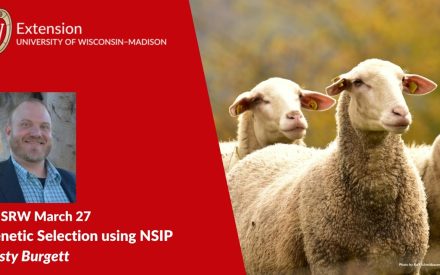
  • Genetic Selection Using NSIPGenetic Selection Using NSIP
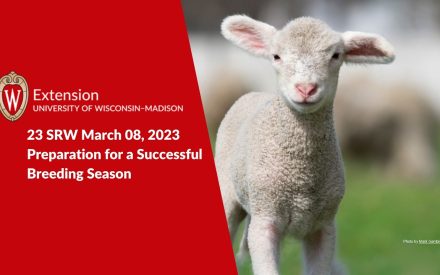
  • Ewe and Ram Management for A Successful Breeding SeasonEwe and Ram Management for A Successful Breeding Season
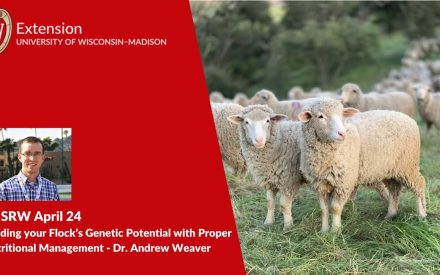
  • Feeding your Flock’s Genetic Potential with Proper Nutritional ManagementFeeding your Flock’s Genetic Potential with Proper Nutritional Management

Division of Extension

Connecting people with the University of Wisconsin

  • Agriculture
  • Community Development
  • Health & Well-Being
  • Families & Finances
  • Natural Resources
  • Positive Youth Development

Agriculture at Extension

  • Animal Sciences
  • Crops and Soils
  • Dairy
  • Farm Management
  • Horticulture
  • Discovery Farms
  • Master Gardener
University of Wisconsin-Madison      |        Explore Extension: Agriculture Community Development Families & Finances Health Natural Resources Youth
Connect With Us
Support Extension
Extension Home

We teach, learn, lead and serve, connecting people with the University of Wisconsin, and engaging with them in transforming lives and communities.

Explore Extension »

County Offices

Connect with your County Extension Office »

Map of Wisconsin counties
Staff Directory

Find an Extension employee in our staff directory »

staff directory
Social Media

Get the latest news and updates on Extension's work around the state

facebook iconFacebook

twitter icon Follow on X


Facebook
Follow on X

Feedback, questions or accessibility issues: info@extension.wisc.edu | © 2026 The Board of Regents of the University of Wisconsin System
Privacy Policy | Non-Discrimination Statement & How to File a Complaint | Disability Accommodation Requests

The University of Wisconsin–Madison Division of Extension provides equal opportunities in employment and programming in compliance with state and federal law.