Introduction
You cannot control the market, but you can control your genetic potential. While cattle prices are high, it might be a good time to improve different aspects of your farm. Fencing, handling facilities, hay storage, and even the cattle themselves can benefit from wise investment.
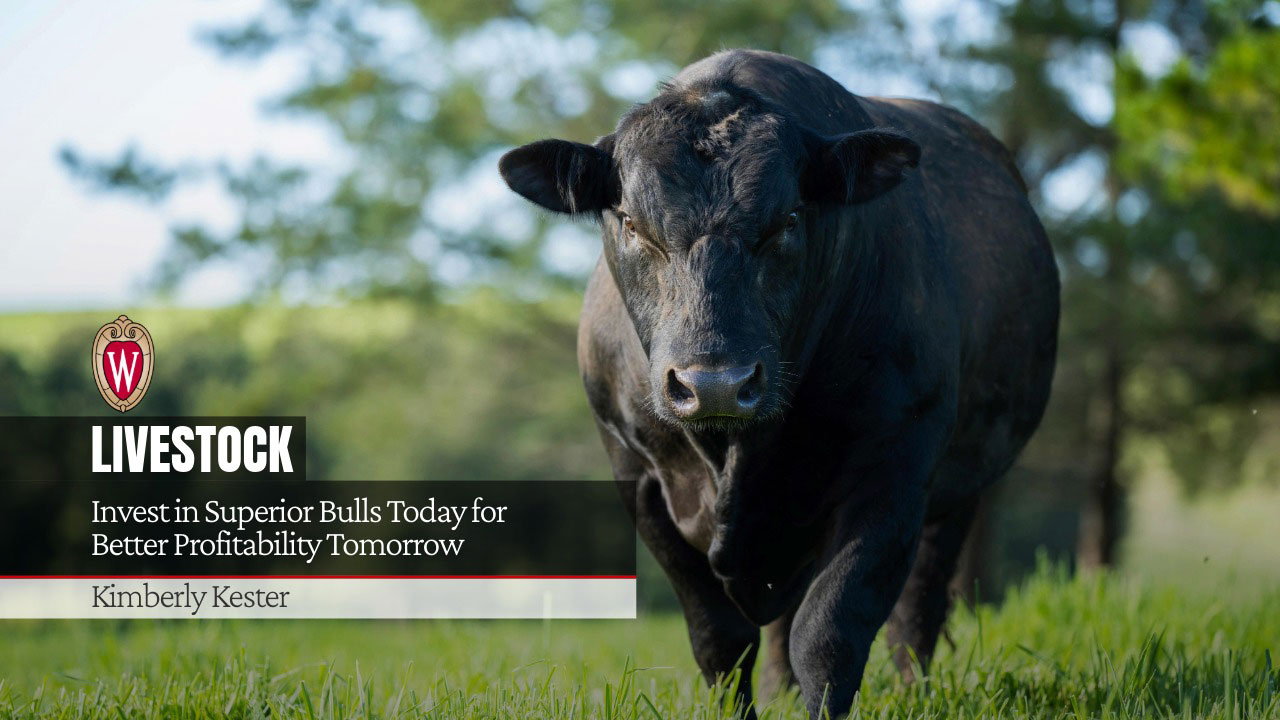
The bull is a critical driver of progress as he contributes 50 percent of the genetics to each calf he sires. His influence will be evident in your herd for generations to come if you retain your own replacements. To help get a perspective on a bull’s long-term influence, the last three bulls make up approximately 87 percent of the cow herd genetics in a “one bull” sized herd with average cull rates. He also produces far more offspring during his lifetime than a cow. Whether purchasing a bull or using artificial insemination (AI), be sure to select an animal that aligns with your current status of your herd, production goals, and management environment. Keep and review good records to determine areas of needed improvement.
Buying a new bull or more expensive straws might feel unnecessarily costly up front, but remember the cost is spread across the entire calf crop. Consider a herd of 20 cows where calves are marketed after weaning. Choosing a bull that will increase weaning weight will help increase returns at the sale barn.
Bull purchase example
You have narrowed it down to two bulls you are considering buying. Bull A is a decent all-around bull for $3,000. Bull B is priced at $4,500, but his expected progeny difference (EPD) for weaning weight is 10 pounds more than Bull A. For the herd of 20 cows, the bull would ideally sire 60 total calves over the next three years. Bull A would cost $50 per calf, and Bull B would cost $75 per calf.
To breakeven, each year Bull B’s calves need to sell for at least $25 more per head. Since his calves weigh 10 more pounds at weaning, Bull B will easily pay for himself within a few years, especially with 400- to 600-pound feeder steers averaging $3.57 to $5.10 per pound across Wisconsin (Equity, 9/25/25). Even if we pick a conservative price at $3.80 per pound, Bull B’s calves will bring $760 more in the first year alone.
Artificial Insemination (AI) example
Consider the same 20-cow herd and marketing strategy, but now you are picking an AI bull. Bull Y is $35 per straw and weaning weight EPD of +63 pounds. Bull Z is $25 per straw with a weaning weight EPD of +48 pounds. Bull Y’s calves will wean 15 pounds heavier than Bull Z. Assuming that same $3.80 per pound, Bull Y’s first-year calf crop will bring $1,140 more at the sale barn and it only cost $200 extra for his straws.
Tight feeder cattle inventories and sustained consumer beef demand means high prices will continue for the foreseeable future. Use today’s increased returns to secure solid bull genetics. This strategic investment will be your profit engine and financial cushion for years to come.
Author

Kimberly Kester
Dairy and Livestock Program Manager – Kimberly’s programming focuses on beef cow-calf operations, specifically genetic improvement, heifer development, and heat abatement. She also supports programming in small ruminant parasite management and poultry flock management.
Published: December 19, 2025
Article originally published: Wisconsin Agriculturalist (October 28, 2025) ↗️
Reviewed by:
- William Halfman, Beef Outreach Specialist at the University of Wisconsin–Madison Division of Extension
- Ryan Sterry, Regional Livestock Educator at the University of Wisconsin–Madison Division of Extension
- Adam Hartfiel, Regional Livestock Educator at the University of Wisconsin–Madison Division of Extension
References
- Barham, B. (n.d.). Beef sire selection [FSA3075]. University of Arkansas Division of Agriculture. https://www.uaex.uada.edu/publications/PDF/FSA-3075.pdf
- Beef Cattle Research Council. (2025). Bull management. https://www.beefresearch.ca/topics/bull-management/
- Equity Cooperative Livestock Sales. (2025, September 25). Statewide market report. https://www.equitycoop.com/index.cfm?show=10&mid=191
- Kasimanickam R., Tibary A., & Kastelic J. (2013). Fundamentals of bull selection. Clinical Theriogenology, 5(2), 97-107. https://clinicaltheriogenology.net/index.php/CT/article/view/10111
- Peel, D. (2025). Cattle and beef market margins. Cow-Calf Corner, Oklahoma State University Extension. https://extension.okstate.edu/programs/beef-extension/cow-calf-corner-the-newsletter-archives/2025/september-8-2025.html