Article Contents
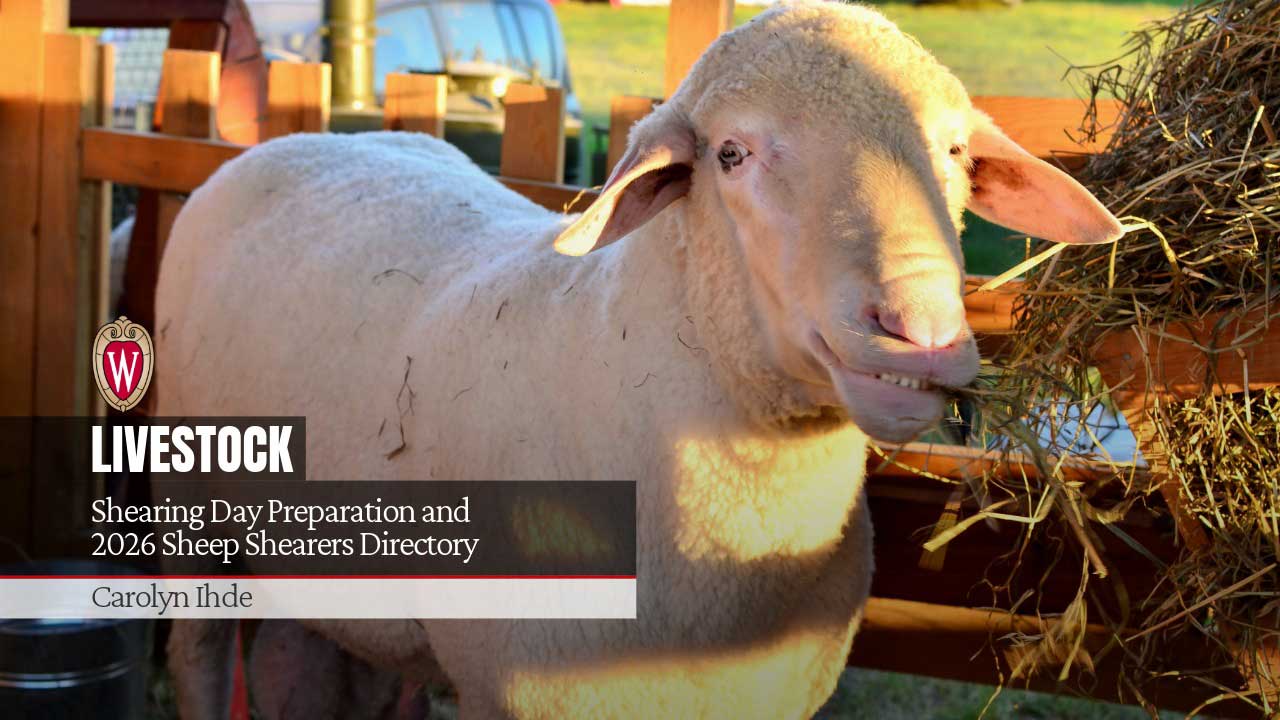
As professional shearers become fewer and schedules fill quickly, Wisconsin producers are encouraged to reach out several weeks to a couple of months ahead of their intended shearing date to ensure the shearer can fit the flock into the route and that the schedule works for both parties. The 2026 Wisconsin Sheep Shearers List was compiled by Lisa Paskey, Coordinator of the Pen of 3 Carcass Evaluation and Hall of Breeds Exhibit for the Wisconsin Sheep & Wool Festival. Paskey contacted shearers across the state to confirm the most current phone numbers, service areas, and any details they wanted producers and returning clients to know. Good communication is key to a successful shearing day. When contacting a shearer:
- discuss facility needs (lighting, electrical, gates and pens, shearing space)
- labor requirements
- start and finish times
- expected shearing pace
- wool‑handling preferences
- shearer’s experience with your breed or type of sheep.
Shearers often appreciate learning about the facilities available, how sheep will be penned and sorted, and what help will be on hand. It is also courteous and helpful to discuss meals and breaks in advance. Providing snacks, lunch, and plenty of water creates a positive working environment and helps the shearing team maintain energy and focus throughout the day.
Producers can help ensure a cleaner, higher‑quality wool clip by reducing contamination from polypropylene twine, net wrap, and grain-tote and tarp fragments; by using only scourable paint for marking animals; and by keeping wool breeds separate from hair sheep to prevent contamination from shed hair. Vegetable matter (VM) can enter the fleece through overhead hay feeding or by fresh straw or wood shavings added to pens leading up to shearing. Consider your feeding and bedding strategy carefully in the days leading up to shearing to reduce VM. Sheep will need to be dry and kept out of snow and rain. Sheep are not shorn when wet, so remember that high humidity can also make wool damp, even when housed indoors.
Fasting sheep prior to shearing supports animal comfort, human safety, and helps minimize contamination of wool and the shearing floor. WorkSafe New Zealand’s Fasting of Sheep Prior to Shearing guide outlines fasting times for the varying production stages of sheep. Sheep should be fasted from all feed and water based on their age and production stage, in accordance with the recommended minimum and maximum fasting periods. Withhold feed for adult, non‑pregnant, non‑lactating sheep for 20–32 hours and 12–24 hours without water. Ewes in early to mid‑pregnancy can generally have food withheld for 18–30 hours and water withheld for 12–24 hours. Ewes in late pregnancy or lactation require shorter fasting periods of 12–24 hours without feed and 8–20 hours without water. Unweaned lambs should remain with their dams until the ewes enter the shearing pens. Caution must be taken to adhere to fasting times, and they should never exceed the maximums, as this increases the risk of metabolic or clinical disease.
To further protect wool quality and maintain a smooth workflow, shear white fleeces first, then colored fleeces or wool with medullated fibers, and shear sick or compromised animals last. If shearing occurs during winter, immediately after shearing, provide warm, draft‑free shelter with ample bedding so animals remain comfortable and protected from cold stress.
No matter whether your flock is managed for wool, meat, seedstock, fiber arts, or land stewardship, good preparation supports both a successful shearing day and the health and welfare of your sheep. Early communication with your shearer, proper facility setup, and thoughtful handling help reduce stress, improve safety, and create a smoother experience for both animals and people. For an easy‑to‑follow checklist that covers everything from pen setup to handling sheep on shearing day, check out the American Sheep Industry Association’s Preparing for Shearing guide. And remember to call early, prepare properly, prioritize animal comfort—and enjoy the harvest!
This list, compiled by Lisa Paskey, is provided as a resource to help Wisconsin sheep producers find qualified shearers.
2026 Sheep Shearers Directory
- Jerry Ace 2209 Leslie Rd, Stoughton, WI 53589 cell # 608-628-7309
- Chris Anfang 2814 10 ½ St, Barronette, WI 54813-9450 cell # 715-822-5272 Machine & hand blade shearers.
- Laura (Matthews) Barrie New Holstein, WI 53061 cell #920-797-9124 email Ps23farm@yahoo.com Machine & blade shearing of small to medium sized flocks
- Meredith Biehl Cedarburg, WI # 414-429-0896 Machine & blade shearing (prefer machine), will trim hooves. All size flocks, prefer up to 30 head. SE/Eastern Wisconsin, N Illinois, Western UP.
- Mike Buckwheat/Bucky’s Hoof Trimming & Shearing cell#715-416-0085 Northern Wisconsin
- Dan Emerick 8710 250th St, Cadott, WI 54727 Home #715-289-4819 Wants to shear & enjoy sheep until he is 90.
- Bob Flaig Luxemburg, WI cell# 920-639-6893
- Richard Hawthorne 2840 Glassgo Dr. Hartford, WI 53027 cell#262-627-9212 email- Lurchesatthefarm@gmail.com Travels all over Southern & Eastern WI & Northern Illinois
- Don Heise N2068 Co. Rd. X, Weyauwega, WI 54983 Home# 715-424-1023 cell# 920-209-4852 email heisedonald@gmail.com Machine shearing. Central WI, will travel. Prefers small flocks less than 30.
- Jerry Held 289 Thackery Dr. Oshkosh, WI 54904 cell# 920-931-5147 email jheld246@gmail.com NE Wisconsin
- Joe Huber Oxford, WI 53952-9351 cell# 608-547-8273
- Josh Huber Oxford, WI 53952-9351 cell# 608-369-3096
- Jordan Huber New Hall, Iowa cell# 608-369-2799
- Edward Jaeger Lake Geneva, WI cell# 262-203-1989 (not taking new clients as of 5-9-2023)
- Blake Johnson West Central Wisconsin cell# 715-313-0818
- Bryan Jones 3255 Lone Pine Rd, Wisconsin Rapids, WI 54495 cell# 715-213-8837 email jonesshearing@gmail.com Wisconsin & neighboring states. Machine shearing of all types of sheep & size of flocks.
- John Kersten 720 Eau Pleine Ct. DePere, WI 54115 Home# 920-336-2069, email John,Kersten@kl.com, NE Wisconsin (not taking new clients as of 5-9-2023)
- Isaac Lind Spirit, WI cell# 608-475-9290 email lindshearing@gmail.com North Central Wisconsin. Large & small flocks, also does hoof trimming. Moved from Montana back to Wisconsin in October 2024.
- Marsha Manlick Pittsville (area), WI 54489 cell# 715-693-6257 email maks2sun@gmail.com on Facebook, small flocks
- Dave Omman 744 Clark St. Hammond WI 54015 Home & cell# 715-796-8802 Western Wisconsin. Retiring in 2025.
- Ryan Ollum cell#715-939-2201 Northern Wisconsin, Machine shearing
- James Peterson 13606 Countyline Rd. Grantsburg, WI cell# 715-225-7014 (not taking new clients as of 5-9-2023)
- John Pogue Deer Brook, WI cell# 1-541-993-9661 small spinning flocks
- Randy Schier N2996 Co. Rd. K Granton, WI 54436 Home# 715-238-7942, cell# 715 -937-8686
- David Schroeder W4351 Kropp Rd, Black Creek, WI 54106 cell# 920-228-0049 email david.tschroeder@yahoo.com
- Justin Taylor W7460 Meek Rd. Arlington, WI 53911 cell# 608-628=8893 Diamond J Lincolns & Shearing
- Hayden Taylor cell# 608-695-5020 email taylorsheep@yahoo.com
- Todd Taylor cell# 608-332-4914 email toddtaylor@wisc.edu
- Brent Winslow MN cell# 1-507-438-8712 Midwest U.S. Alpaca & Sheep Shearing
Author

Carolyn Ihde
Carolyn Ihde is a Small Ruminant Outreach Specialist for the University of Wisconsin-Madison, Division of Extension, Agriculture Institute.
Published: December 5, 2025
Reviewed by:
- Kim Kester – Program Manager for the Dairy and Livestock Programs, University of Wisconsin–Madison Division of Extension
- Casey Lobdell – Regional Livestock Educator, University of Wisconsin–Madison Division of Extension Grant, Green, Iowa and Lafayette Counties
References
- American Sheep Industry Association. (2022). Preparing for shearing. https://www.sheepusa.org/wp-content/uploads/2022/09/Preparing-for-Shearing.pdf
- Paskey, L. (2024, October 28). 2024 Wisconsin sheep shearers update.
- WorkSafe New Zealand. n.d. Fasting of Sheep Prior to Shearing: Good Practice Guide. https://www.worksafe.govt.nz/topic-and-industry/agriculture/working-with-animals/working-with-sheep/fasting-of-sheep-prior-to-shearing-gpg/