

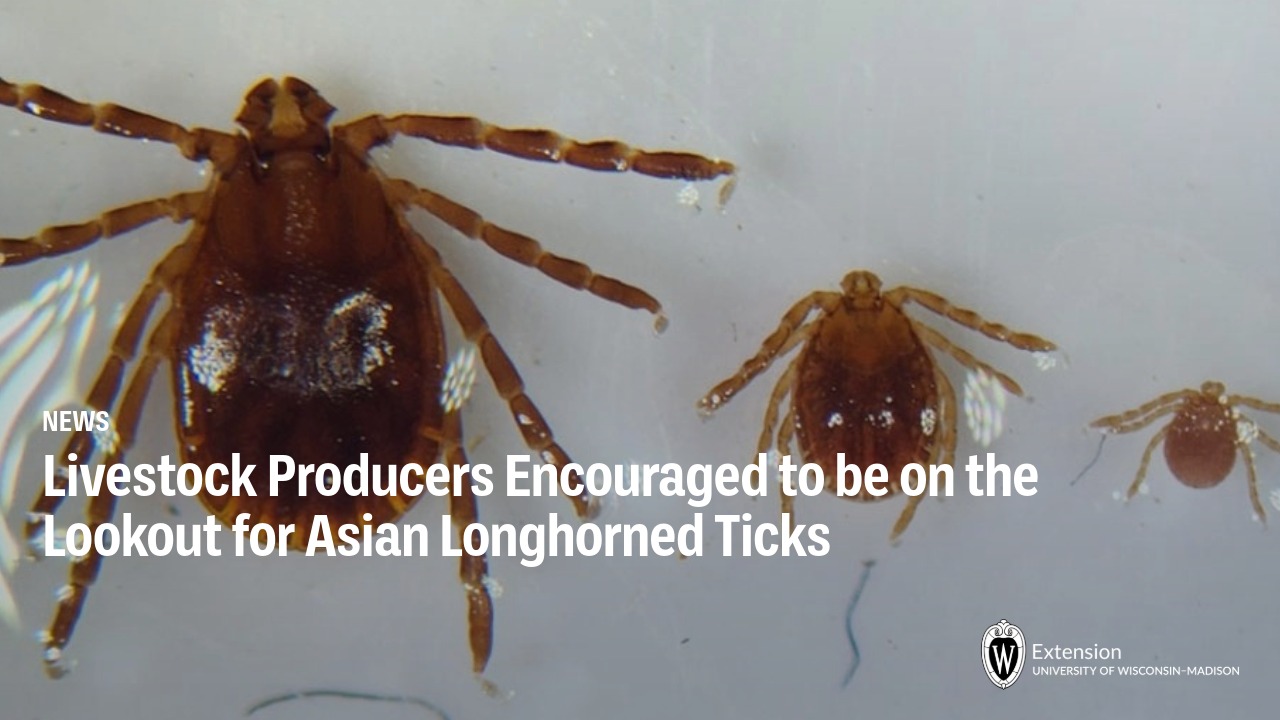
The Asian longhorned tick is an invasive species first positively identified in the United States in New Jersey in 2017. It has been rapidly expanding westward across the United States primarily as unwanted and undetected passengers on cattle and other livestock as they are moved around the country from areas where it is established. It has been identified in the adjacent states of Michigan, Illinois and Iowa within the past two years. To date, this tick has not been identified in Wisconsin, but research suggests that Wisconsin’s climate is suitable for it to survive.
Threats posed by Asian Longhorned Ticks
Asian longhorned ticks pose threats to livestock and cattle, in particular. The Asian longhorned tick is not a very selective feeder and will attach and feed on a wide range of animals. This tick species multiplies by a process called parthenogenesis, meaning they do not have to mate with males to reproduce and almost all the ticks that are produced are females. A single female can lay up to 3000 eggs, so they can multiply rapidly and pastures can accumulate very high populations of ticks. This can result in high numbers of ticks, up to thousands, feeding on an animal at one time, leading to anemic conditions from blood loss, especially for small animals. High infestation rates also lead to discomfort and decline in growth and performance.
Disease Risks and Health Impacts on Cattle
The Asian longhorned tick is also a vector for Theileria orientalis, which is a protozoan organism that attacks red and white blood cells in cattle. Symptoms include lethargic behavior, heavy labored breathing, anemic symptoms, late term abortion, and potentially death. Death losses of up to 20 percent have been reported. Some cattle who get infected don’t show any symptoms. Cattle can recover, but all cattle that become infected are infected for life. Stress can cause recovered animals to relapse. It can also be transmitted via needle or other instruments that could transfer blood from animal to animal. There is no vaccine at this time.
Importance of Early Detection and Prevention Measures
Early detection helps livestock producers be proactive in implementing control measures to reduce the risk of catastrophic problems. Inspecting livestock and pets regularly for ticks around the ears, underlines, “arm pits” of front and rear legs, and around the tails and tail heads will help detect the ticks early. Inspecting new herd additions, applying an acaricide with good coverage, and isolating the animals for a time to monitor them for ticks and cattle for symptoms of Theileria can help reduce the risk of introducing the tick. Many of the pour-on and spray-on products used for fly control are acaricides. If you find ticks on livestock they can be submitted to your veterinarian or to the UW-Madison Department of Entomology for identification.
Additional Resources and Information
More detailed information on the Asian longhorned tick, Theileria, and management practices can be found in a new UW-Madison Extension fact sheet titled The Asian Longhorned Tick: An Emerging Threat.
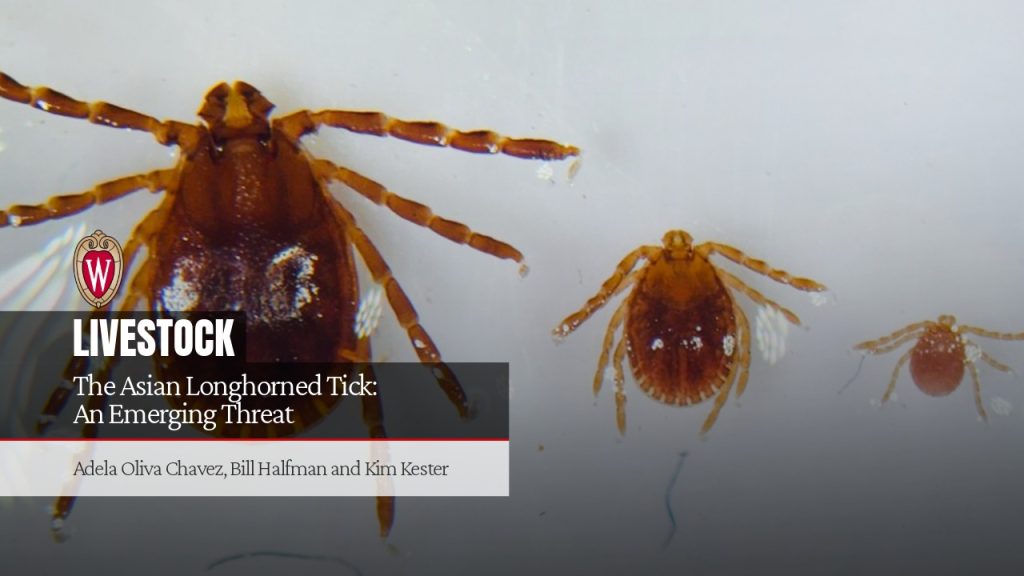
READ: The Asian Longhorned Tick: An Emerging Threat
Written by Adela Olivia Chavez, Bill Halfman and Kimberly Kester

UW-Madison Extension
Livestock Program News



Subscribe to our Livestock Newsletter

Subscribe to the Livestock Program Newsletter to receive the latest Livestock research articles and information about upcoming Livestock events!