Introduction
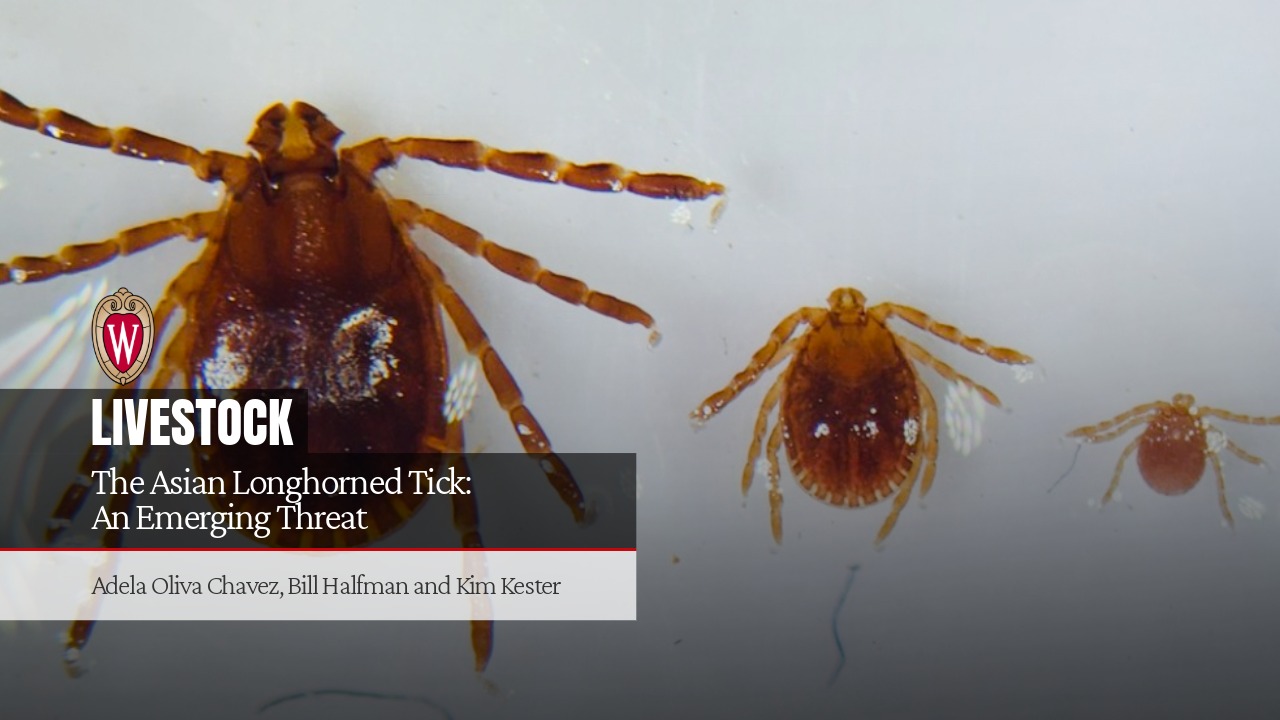
The Asian longhorned tick (Haemaphysalis longicornis), is an invasive tick species originally native to China, Japan, and other East Asian countries. As of now, the Asian longhorned tick has been identified in over 280 counties across 26 states (App 2025). The presence of the Asian longhorned tick in the United States was first confirmed in Mercer County, New Jersey, in 2017 (Rainey et al. 2018). Since its initial detection, this species has rapidly expanded its range. It has spread into states adjacent to Wisconsin, including Illinois, Iowa, and Michigan. In June 2025, the tick was confirmed in Van Buren County, Iowa, highlighting its ongoing expansion throughout the country. Although to date the tick has not been identified in Wisconsin, our climate is predicted to be suitable for the tick and populations will likely establish in the future. A major contributor to the rapid spread of this tick in the United States is the significant movement of livestock around the country, some of which have ticks feeding on them during transport. The extent that wildlife spread these ticks around is not well understood at this time. Furthermore, some of these ticks are infected with an emerging bovine pathogen, Theileria orientalis (Dewell 2025), which causes Bovine Theileriosis.
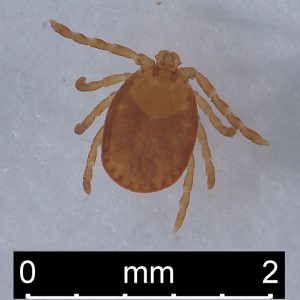
Credit: Dept. of Entomology & Plant Pathology, University of Tennessee Knoxville
The tick
The Asian longhorned tick displays a remarkable reproductive strategy known as parthenogenesis, meaning that female do not have to mate with males. As almost all Asian longhorned ticks are females. A single female tick will lay up to 3,000 eggs near the end of her lifetime. This reproductive capability, independent of males, contributes to the species’ rapid population growth and successful establishment in new environments (Pennsylvania).
The life cycle of the Asian longhorned tick consists of three distinct developmental and active life stages after hatching from the egg: larvae, nymphs, and adults, and all three life stages must take a blood meal to molt and develop into the next stage. This tick is referred to as a three-host tick, as during each life stage the tick will feed on a different host (could be the same species, but it must leave the host to molt). The species transitions through these stages under varying seasonal conditions, but in favorable environments the entire life cycle can be completed within six months, although this period is often extended in natural settings (Tian and Kaufman 2020).
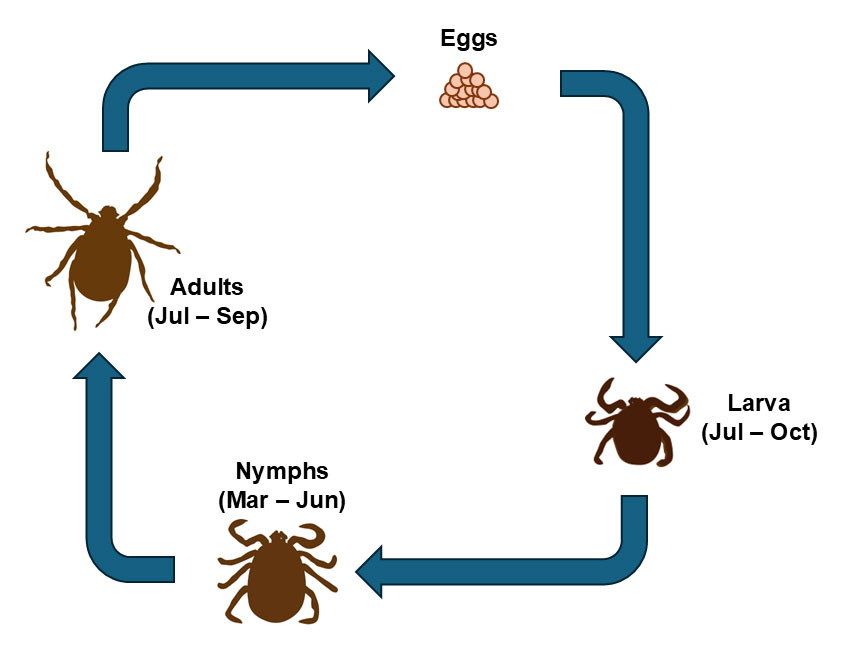
Credit: Dr. Adela Chavez, Dept. of Entomology, University of Wisconsin-Madison
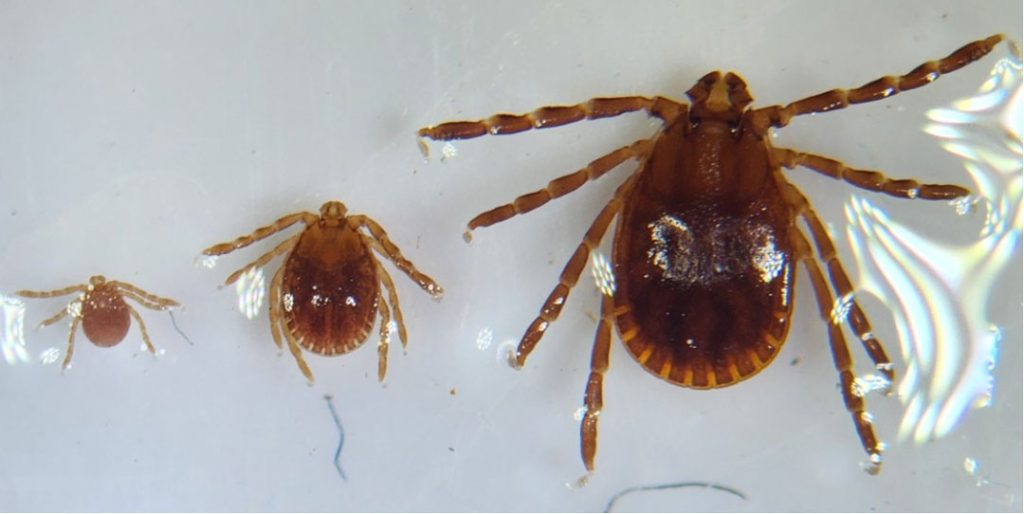
Credit: Dept. of Entomology, Kansas State University
Larval ticks are most commonly found looking for hosts in late summer into fall. Larvae that fed during the fall delay their development during winter (González, Fonseca, and Toledo 2024). Nymphs generally start to be found in the spring in March until early summer. From mid-summer until early fall, adult ticks tend to infest medium to large animals, including livestock, which can lead to significant health concerns for the affected animals. There have been some observations where multiple stages of development have been observed at the same time. How common this occurs is not known. Due to their size, larvae are difficult to detect; however, adults can be identified visually. Adults and nymphs will feed on cattle.
Ticks can be found feeding around the ears, along the underline, including the “armpit” areas for both front and hind legs, and around/under the tail head (Steckler 2024). These infestations can be severe, with hundreds or even thousands of ticks present on a single animal. Heavy infestations can cause significant stress in affected animals, leading to reduced growth and decreased milk production. In extreme cases, excessive blood loss from large numbers of ticks can result in the death of the infested animal. During super infestations, the ticks are often detected on the animals before they are observed in the field (Olds 2026).
Although this tick has not been found in Wisconsin to date, due to its presence in Illinois and Iowa, Wisconsinites should be alert and monitoring their livestock and pets for their presence.*
*This can be accomplished by inspecting animals for ticks and submitting specimens to the tick laboratory at the Department of Entomology at the University of Wisconsin-Madison or diagnostic laboratories for identification and pathogen testing.
Follow instructions for shipping soft specimens to the UW Insect Diagnostic Lab. Your veterinarian can help with identification and sample submission.
The Pathogen
Theileria orientalis is a protozoan parasite transmitted by Asian longhorned ticks that infects both red and white blood cells in cattle, leading to anemia, jaundice, weakness, and, in some cases, death (Dinkel et al. 2021; USDA 2021). There are three genotypes in the U.S., with Ikeda and Chitose considered pathogenic. This pathogen has been detected in several U.S. states, including Iowa. Although it is still too early to fully assess its economic impact in the United States, outbreaks in New Zealand—where the parasite was introduced from Australia—resulted in costs of up to approximately $8,000 (US dollar equivalent) per farm in 2013 due to treatment expenses, reduced production, and cattle mortality (Lawrence et al. 2021). In Australia, the parasite has caused annual losses estimated at $19.6 million (Dinkel et al. 2021). These figures highlight the potential for significant economic consequences in the U.S.
Transmission of the pathogen occurs several days after tick feeding. Clinical signs of infection include diarrhea, declining body condition, anemia, loss of appetite, jaundice (yellowing of mucous membranes), fever, weakness, increased heart and respiratory rates, and lethargy. In animals, 6 months or younger pneumonia-like symptoms may develop (Olds, 2026). Laboratory findings may show elevated levels of Gamma-Glutamyl Transferase (GGT) and bilirubin, the presence of parasites in red blood cells (visible in blood smears during acute infection [see image]), and enlarged spleens observed during post-mortem examinations (Lawrence et al. 2021). However, diagnosis is primarily confirmed through Polymerase Chain Reaction (PCR) testing from whole blood conducted in accredited laboratories. Mortality rates have been reported up to 20% in infected animals (Smith et al. 2025).
After recovery, those animals that survive become lifelong carriers and stress can lead to reappearance of the disease (Lahmers). Recovered animals also serve as a source of infection for ticks and by mechanical transmission – contaminated needles or instruments (Lakew, Eastwood, and Walkden-Brown 2023). Theileria can also be transferred from animal to animal within a herd when conducting procedures where blood could be transferred from animal to animal, such as vaccinating and surgical castration. Lice can also transmit this pathogen and recent studies suggest that the pathogen can be found in the mouthparts of stable flies, although their ability to act as vectors is currently unknown (Olds 2026). Veterinary instruments that transmit blood such as needles and scalpels, contribute to this risk if they are not changed or disinfected between animals.
There is currently no specific treatment for the disease. Supportive care includes providing proper nutrition, minimizing heat stress by keeping animals in shaded areas, and monitoring anemia levels under the supervision of a veterinarian or trained personnel.
The longhorned tick is not known to transmit any pathogens to small ruminants in the US. Yet, important economic losses and mortality may be associated with loss of blood during tick feeding.
Management Practices for Asian Longhorned Ticks
The most effective strategy for minimizing transmission is prevention. Ongoing research is being conducted to increase understanding of the Asian longhorned Tick and best management practices. Current recommended management practices for reducing risk of tick and disease exposure include (Dellinger and Day 2020; Machtinger and Skvarla 2023):
Preventative Measures
Before the tick is detected in your area (closer than 70 miles)
- Until you know that the tick has been detected in your area, monitor your cattle for the presence of longhorned ticks.
- When possible, purchase animals from known sources
- Inspect animals on arrival and treat them with a pour on/spray acaricide or ivermectin. Be sure to get all surfaces, underline and pits where ticks tend to congregate. This is especially important if these ticks are known to be present in the area where the animal is being transported from. Follow label directions for correct dosage. Permethrins, lambda-cyhalothrin, phosmet, diflubenzuron, piperonyl butoxide (Butler et al. 2021) are commonly used pesticides for controlling insect pests that are also effective against ticks (acaricides). Rotate acaricides to avoid building resistance in the population (Dellinger and Day 2020). Isolate animals upon arrival and watch for signs of illness. This is good practice for overall biosecurity.
- If pets (dogs and cats) are present on the farm, you may consider talking to your veterinarian about tick control for your pets.
- Clean the trailer that you used to transport any animals that were acquired from areas where the tick is present. The bedding and manure should be isolated on a hard surface and treated with acaricide or isolated on a hard surface and burned. Ticks that have finished feeding may drop off the host animal during transport and be in the manure and bedding to lay eggs or molt.
Management
After the tick has been detected in your area (closer than 70 miles)
- If you find ticks on your livestock or pets, contact your veterinarian to help with positive identification. Your veterinarian can also help put together a management plan.
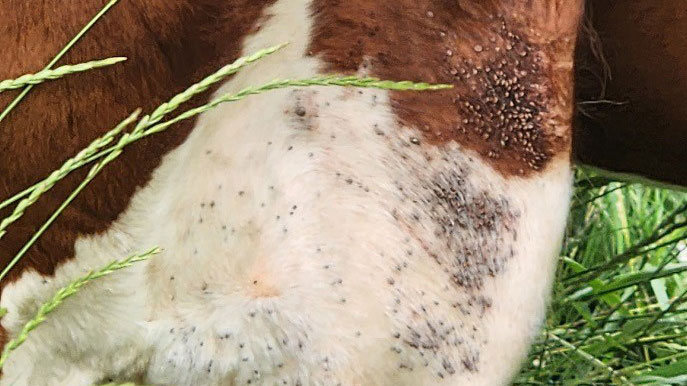
Credit: Dept. of Entomology, Kansas State University
- Begin implementing a practice of single use of needles (changing needles between cattle) and disinfecting other blood-transmitting veterinary instruments between each animal.
- Manage pasture grass height to reduce tick habitat (Butler and Trout Fryxell 2023). Limited research has shown that monthly shortening of forage height to approximately 4 inches through grazing, harvesting for hay, or brush/bush hogging allows the plant residue to dry out enough to reduce tick populations. It may be necessary to mow areas in grazed paddocks or pastures so that the cattle graze short enough. Ticks need a high humidity environment to survive (Vail, Trout Fryxell, and Butler 2020).
- If Asian longhorned ticks are detected on the farm, insecticide impregnated ear tags will help kill ticks in and close to the ears but not those located on the rest of the body. For spray on treatments, it is important to get good coverage of the whole animal including the underline. If high infestations are found on cattle, you need to use pour-on treatments of macrocyclic lactones to treat those animals. Make sure to treat all the animals in the herd. Follow product labels for treatment frequency. Rotate active ingredients and use good IPM practices to reduce risk of developing resistance
- Avoid applying acaricides to pastures as it is unlikely to be effective in killing ticks protected by thick grass and thatch. Acaricides will reduce beneficial insect populations in the forage stand. Wildlife may reintroduce infected ticks into the pasture [although the exact impact of wildlife in the reintroduction of ticks is not fully understood]. It is more efficient and effective to apply acaricides to animals rather than treat pastures.
- There is no curative treatment available in the U.S. for theileriosis at this time. If you suspect that an animal is infected, keep the animal as comfortable as possible in a low-stress environment and provide plenty of palatable food and water. Contact your veterinarian for supportive care options (Olds 2026).
General buffer area suggestions
- Implement a buffer between pasture areas and forest areas. One method would be to use electric fencing to create a buffer between the pasture and the forest area of approximately 10 to 20 feet and keep it mowed. These options will not prevent ticks from being moved by wildlife, but it reduces the overall number of ticks.
- Prevent your cattle from going into woody areas when possible. Woody areas have higher humidity in the understory and are impractical to try to control forage height. If your cattle go into the woods, we recommend that you monitor tick infestations more frequently.
The Asian longhorned tick and Theileria are an emerging problem in the United States and best management practices may evolve as we increase our understanding of this new pest
References
- App, The Tick. 2025. “Asian Longhorned Tick Situation Report.” Texas A&M University, Last Modified October 20th, 2025, accessed October 26. https://tickapp.tamu.edu/invasive-ticks/asian-longhorned-tick-situation-report/.
- Butler, R. A., J. G. Chandler, K. M. Vail, C. J. Holderman, and R. T. Trout Fryxell. 2021. “Spray and Pour-On Acaricides Killed Tennessee (United States) Field-Collected Haemaphysalis longicornis Nymphs (Acari: Ixodidae) in Laboratory Bioassays.” J Med Entomol 58 (6):2514-2518. doi: 10.1093/jme/tjab115.
- Butler, R. A., and R. T. Trout Fryxell. 2023. “Management of Haemaphysalis longicornis (Acari: Ixodidae) on a cow-calf farm in East Tennessee, USA.” J Med Entomol 60 (6):1374-1379. doi: 10.1093/jme/tjad121.
- Dellinger, T. , and E. Day. 2020. “Managing the Asian Longhorned Tick: Checklist for Best Management Practices for Cattle Producers.” accessed October 27. https://www.pubs.ext.vt.edu/content/dam/pubs_ext_vt_edu/ENTO/ento-382/ENTO-382.pdf.
- Dewell, G. 2025. “Beef Cattle Disease Confirmed in Iowa for the First Time.” Last Modified June 13, 2025, accessed October 26. https://www.extension.iastate.edu/news/beef-cattle-disease-confirmed-iowa-first-time.
- Dinkel, Kelcey D., David R. Herndon, Susan M. Noh, Kevin K. Lahmers, S. Michelle Todd, Massaro W. Ueti, Glen A. Scoles, Kathleen L. Mason, and Lindsay M. Fry. 2021. “A U.S. isolate of Theileria orientalis, Ikeda genotype, is transmitted to cattle by the invasive Asian longhorned tick, Haemaphysalis longicornis.” Parasites & Vectors 14 (1):157. doi: 10.1186/s13071-021-04659-9.
- González, J., D. M. Fonseca, and A. Toledo. 2024. “Effect of short photoperiod on the development of Haemaphysalis longicornis (Ixodida: Ixodidae).” J Med Entomol 61 (2):504-507. doi: 10.1093/jme/tjad171.
- Lahmers, Kevin. “Theileria orientalis Ikeda genotype in cattle “. Virginia Department of Agriculture and Consumer Services, accessed 1/27/2026. https://vitals.vetmed.vt.edu/content/dam/vitals_vetmed_vt_edu/documents/theileria-summary.pdf.
- Lakew, B. T., S. Eastwood, and S. W. Walkden-Brown. 2023. “Epidemiology and Transmission of Theileria orientalis in Australasia.” Pathogens 12 (10). doi: 10.3390/pathogens12101187.
- Lawrence, K., K. Gedye, A. McFadden, D. Pulford, A. Heath, and W. Pomroy. 2021. “Review of the New Zealand Theileria orientalis Ikeda Type Epidemic and Epidemiological Research since 2012.” Pathogens 10 (10). doi: 10.3390/pathogens10101346.
- Machtinger, E. , and M. Skvarla. 2023. “Asian Longhorned Tick, Haemaphysalis longicornis.” Penn State Extension, accessed October 26. https://extension.psu.edu/asian-longhorned-tick-haemaphysalis-longicornis.
- Olds, C. 2026. Uninvited guests: Asian Longhorned ticks and Theileria orientalis Department of Entomology. Kansas State University.
- Pennsylvania, Commonwealth of. “Asian Longhorned tick.” accessed October 26. https://www.pa.gov/agencies/dep/programs-and-services/integration/vector-management/ticks/asian-longhorned-tick.
- Rainey, T., J. L. Occi, R. G. Robbins, and A. Egizi. 2018. “Discovery of Haemaphysalis longicornis (Ixodida: Ixodidae) Parasitizing a Sheep in New Jersey, United States.” J Med Entomol 55 (3):757-759. doi: 10.1093/jme/tjy006.
- Smith, K. V., J. G. Chandler, R. A. Butler, W. Smartt, S. Beaty, and R. T. Trout Fryxell. 2025. “Detection and response to Haemaphysalis longicornis and Theileria orientalis Ikeda on a cow-calf farm in Tennessee (USA).” Med Vet Entomol. doi: 10.1111/mve.70043.
- Steckler, T. 2024. “Livestock recommendatios for the Asian Longhorned Tick.” The Cattle Connection, accessed 1/4/2026. https://extension.illinois.edu/blogs/cattle-connection/2024-05-17-livestock-recommendations-asian-longhorned-tick.
- Tian, Y. , and P. Kaufman. 2020. “Asian Longhorned Tick Haemaphysalis longicornis Neumann (Arachnida: Acari: Ixodidae).” accessed October 26. https://edis.ifas.ufl.edu/publication/IN1263.
- USDA. 2021. “Emerging Risk Notice: Theileria orientalis.” accessed October 27. https://www.aphis.usda.gov/sites/default/files/theileria-orientalis-ikeda-notice.pdf.
- Vail, K. M., R. Trout Fryxell, and R. A. Butler. 2020. “Insect(tc)ure: Are you insecure about your insect cures?”. University of Tennesse Extension, Institute of Agriculture, accessed 1/4/2026. https://epp.tennessee.edu/wp-content/uploads/sites/267/2023/11/2021-01ALTV2I1.pdf.
Originally Published: April 2026
Authors
- Adela Olivia Chavez, Ph.D. – Assistant Professor, Department of Entomology, University of Wisconsin-Madison
- Bill Halfman – Beef Outreach Specialist, University of Wisconsin-Madison Division of Extension
- Kim Kester, Ed.D. – Dairy and Livestock Program Manager, University of Wisconsin-Madison Division of Extension
Reviewed by:
- Cassandra Olds, Ph.D. – Dept. of Entomology, Kansas State University
- Rebecca Trout Fryxall, Ph.D. – Department of Entomology and Plant Pathology, University of Tennessee Knoxville
- Katy Smith – Department of Entomology and Plant Pathology, University of Tennessee Knoxville