Gene Schriefer, former University of Wisconsin Division of Extension Agriculture Educator from Iowa County will discuss how to optimize the utilization of forages to meet the nutritional needs of sheep and goats by properly planning grazing systems with forage production, carrying capacity, and paddock size in mind.
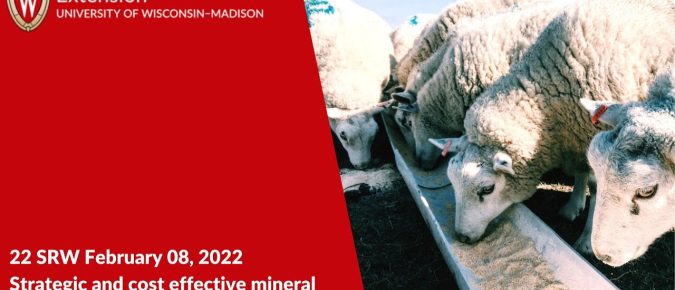
Dr. Whit Stewart Assistant Professor and Extension Sheep Specialist from the University of Wyoming joins the UW-Madison Division of Extension’s 2022 Small Ruminant Webinar Series. Dr. Stewart outlines and supports with research, the mineral needs of sheep during the different stages of production and the various regions of the US. Stewart provides insight into how soils affect mineral levels in forages and how testing forages allows producers to balance rations to meet nutritional needs.
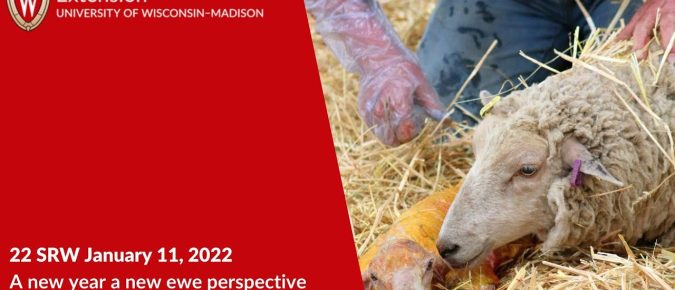
UW-Madison Arlington Research Station Sheep Unit Program Manager Todd Taylor discusses the most complex sheep on the farm, the ewe. As the ewe moves through the production cycle, her needs change. Learn about how to care for the ewe before breeding, during gestation, after lambing, and at weaning to ensure she is productive for years to come.
Gene Schriefer, UW-Madison Division of Extension, and Adam Abel, Natural Resource Conservation Service (NRCS) Soil Conservationist discuss planning for intentional grazing of sheep and goats.
Branding represents your message to your consumer about your product. What is it that your product stands for? Branding helps differentiate your product from everyone else’s. When we market our product, we’re selling the brand. This webinar will showcase three producers and different means by which they connect with the consumer to sell meat and fiber.
Consumer demand for lamb and goat from ethnic communities with a cultural bias for lamb and goat consumption is growing. Some demand is seasonal centered around holidays and other demand is more year round. Ethnic consumers are often looking for different type of lamb or goat than the traditional commodity product. Understanding different ethnicities and demand and meeting this market represents a potential profit opportunity for lamb and goat producers.
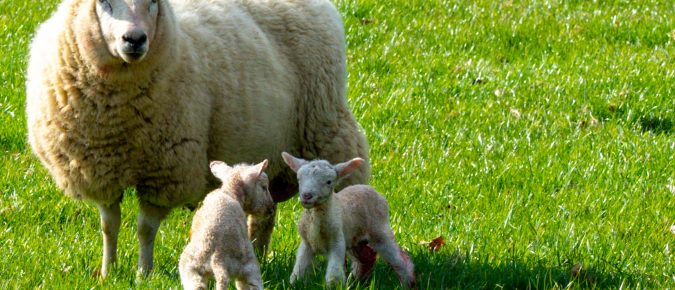
What are the signs of impending birth in ewes and does? Should I help and when should I help? What are typical best practices with newborn lambs and kids? Are the tools and supplies that will make lambing and kidding less stressful? This webinar is for beginning sheep and goat producers nervous and unsure about their upcoming lambing and kidding season to enable them to develop their skills and confidence.
Feed represents the single largest expense for sheep and goat producers and the base of every small ruminant diet is forage. This webinar helps producers know how to take a representative forage sample, understands the results and how to apply this information in making economical feeding decisions.
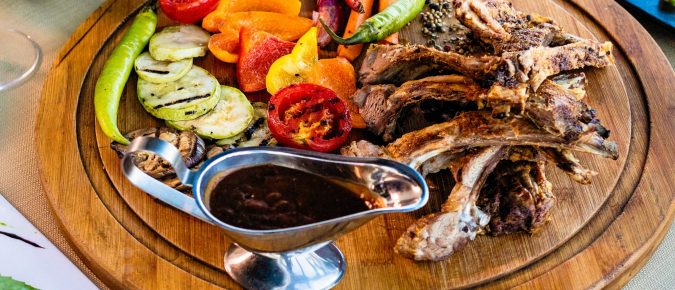
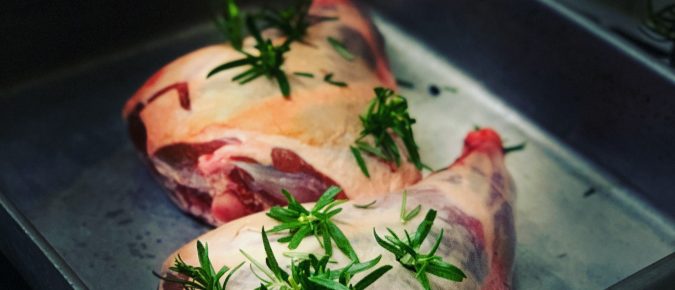
Tips to help you better understand the amount of edible product expected from a grain finished lamb.
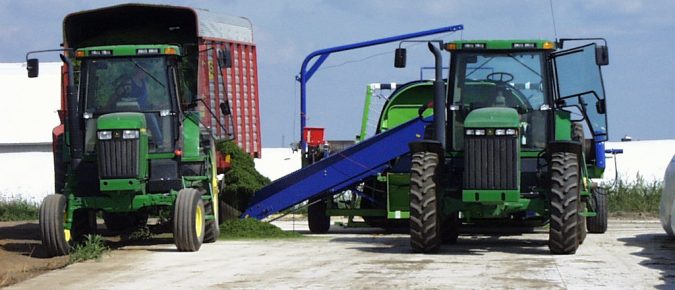
Feed cost is usually ranked as the highest expense in animal production. Proper management of feed storage can prevent feed shrink – or the loss of feed. Reducing feed shrink in storage can help decrease the cost of production.