As spring calving has wrapped up it is time to turn our attention toward breeding season. Many times when we think about breeding season we think about preparing our cows and heifers (vaccinations, parasite control, etc.) to ensure a successful breeding season, but what about our bulls?
One way we can ensure our bulls are ready for the task at hand is through performing breeding soundness exams (BSE) on our herd sire arsenal. Breeding soundness exams provide cow-calf producers with some insurance that their bulls are fertile, physically capable, and in the right body condition to effectively breed cows. However, few cow-calf producers implement breeding soundness exams on their bulls.
Breeding soundness exams look at three components: the bulls’ physical structure and condition, reproductive organs, and semen.
Physical Structure
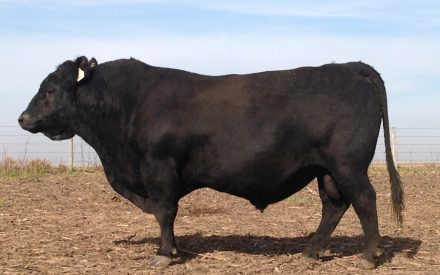
Bulls should be able to move about the pasture with ease on a good set of feet and legs free from any discomfort. Any feet and leg issues could be detrimental to the bull’s breeding ability. The bull’s body condition score (BCS) should also be taken into account as bulls that are too thin or too fat tend to be less active. At the start of breeding season bulls should be between 5.5 to 6.5 BCS meaning the bulls have full muscling, their backbone and ribs are not visible and some fat may be deposited in their briskets and around their tail heads. It is important for bulls to have optimal body condition as their BCS will decrease throughout the breeding season (Ellis, Rupp, Chenoweth, Cundiff, Lunstra, 2005)
Reproductive Organs
During the breeding soundness exam the bull’s internal and external reproductive organs are examined to ensure the bull has no injuries or defects. The bull’s scrotal circumference is measured and must meet a minimum requirement for the bull’s age in order to pass a breeding soundness exam. Scrotal circumference is especially important in immature bulls as it is used as an indicator for semen volume.
Semen Quality
A semen sample will be collected during the breeding soundness exam and examined under a microscope for sufficient motility (movement) and morphology (proper shape). The semen sample will also be checked for white blood cells that could diminish the bull’s reproductive ability.
Breeding soundness exams should be conducted at the proper time as spermatogenesis (the processes of producing sperm) takes 60 days. The breeding soundness exam should be conducted after the cold winter months when injury due to cold temperatures could occur and before breeding season so that if the bull is declared unsatisfactory to breed he can be replaced or substituted.
Breeding soundness exams are a valuable tool that can save cow-calf producers time and money by preventing the use of bulls that cannot get cows bred. One unsatisfactory bull can have a negative impact on the herd’s conception rates, calving window, and weaning weights resulting in a potential loss of profit.
References:
Ellis, R.W; Rupp, G.P; Chenoweth, P.J; Cundiff, L.V; Lunstra, D.D. “Fertility of yearling beef bulls during mating.” Theriogenology, 2005, Vol.64 (3), p.657-678)
Barth, A. D. “Review: The use of bull breeding soundness evaluation to identify subfertile and infertile bulls.” Animal (Cambridge, England), 2018-06, Vol.12 (s1), p.s158-s164
Reviewed by: Ryan Sterry and Bill Halfman, UW-Madison Division of Extension Agriculture Agents in St. Croix and Monroe Counties.