Rainfall through the heart of the Midwest and for most producers across Wisconsin has been a topic to avoid this past spring and summer. Hot summer days were not usually followed by stormy afternoons and much needed rainfall. Crops and pastures started to feel the hot, dry conditions in early June. Prompting conversations about reduced crop and pasture yields for all. As we approach the second half of summer and head into early fall, here are a couple things to keep in mind.
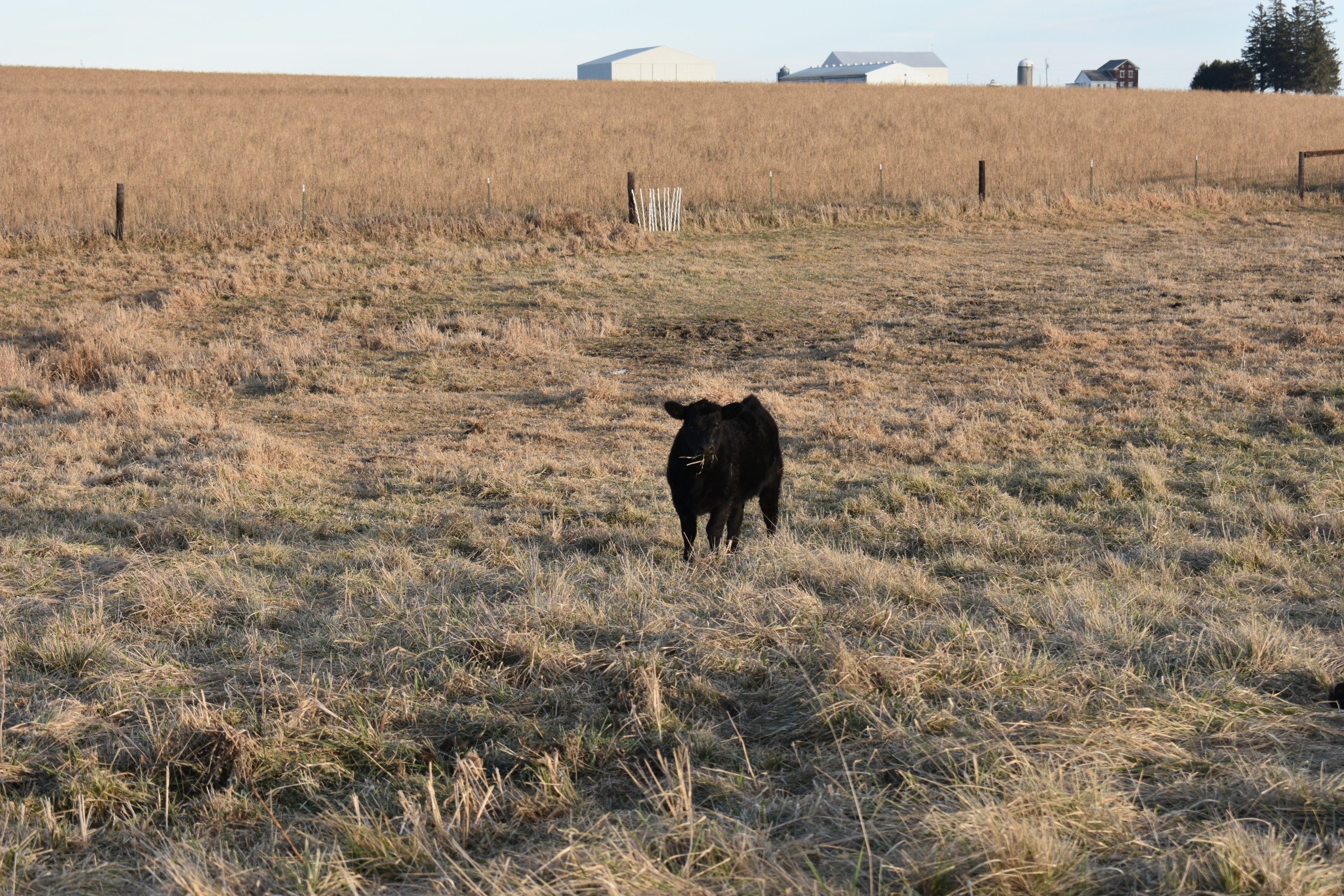
Pregnancy checks
Pregnancy diagnosis is an easy way to help make management decisions during drought or reduced forage availability. Typically, August and September are great months for ultrasounding your spring-calving cows to see if they are indeed bred for the upcoming spring. The sooner you identify open cows and heifers, the earlier you can send the open cows to market, saving feed, time, and other valuable resources. Checking replacement heifers to see if they are bred has two benefits, it will identify which animals are indeed bred, and allow open heifers to be fed out and be marketed at less than 30 months of age to maximize value. Early pregnancy in cows can be detected as early as 28-30 days after breeding when blood tests are used. These tests are typically 95-99% accurate, making decisions on marketing open animals is easier for producers right away if feed is already being stretched. Other forms of pregnancy tests like palpation and ultrasound can be performed between days 35-50. University of Wisconsin-Madison has more information available on determining cattle pregnancy status.
Marketing opportunities
Taking advantage of the strong market we’ve had this year for market cows is an option for producers trying to save their pasture and reduce or eliminate the need for purchasing forage. By marketing your older, and less productive cows, cows with bad dispositions, health problems and, cows without calves by their side, you will be saving your pasture not only for the current year, but for many more years to come. Consider marketing lactating cows that have bad feet, legs, and udders. Even though those cows may be bred back, ask yourself how long they will be able to hold a calf and themselves through a tough winter and unknown spring.
Larger cows with greater nutritional needs may also be a candidates for market if they are not fitting your operation’s genetic goals. A study done by Scasra, et.al, 2015 indicated that “both moderate to large-sized cows offer advantages in calf weaning weights during extreme drought conditions due to potential advantages of balancing optimal rumen capacity and dry matter intake (DMI).” Keeping moderate to large-sized cows versus only large cows may help maintain stocking rates and forage availability when forage is limited. Holding onto cows you know will be sold later in the fall or will not make it to the next calving season will only increase internal costs, financial risks, and have potentially negative effects on cow/calf pairs already within the herd. Stay ahead of typical market seasonality this fall and make decisions early to hopefully benefit your operation in the years to come.
More information on marketing cows in your cow-calf herds and other related decisions tools can be found online following the links below.
Culling Considerations for Beef Cow-Calf Herd – Livestock (wisc.edu)
Don’t let open cows eat your feed, and profits, this winter – Livestock (wisc.edu)
Plan ahead
No matter what situation you find yourself in, pre-planning options for evaluating your herd or marketing animals never hurts. Knowing where your herd stands after the breeding season will help make management decisions easier and can put you ahead of the game in terms of marketing those animals if that is the route you choose. Make a plan with your veterinarian today to check cows and heifers, order and gather supplies so you can be prepared for the weeks ahead. It is very hard to control the weather or what our yields will look like this fall, but we can control the strategies and plans we have in place to combat issues we may run into.
Resources
- Waechter-Mead, L., & McCarthy, K. (2022, September 1). Can early pregnancy detection help you make culling and replacement decisions this fall?. UNL Beef.
- Peel, D., & Doye, D. (2017, February 1). Cull cow grazing and marketing opportunities – Oklahoma State University. Cull Cow Grazing and Marketing Opportunities | Oklahoma State University.
- J. D. Scasta and others, Drought effect on weaning weight and efficiency relative to cow size in semiarid rangeland, Journal of Animal Science, Volume 93, Issue 12, December 2015, Pages 5829–5839, https://doi-org.ezproxy.library.wisc.edu/10.2527/jas.2015-9172