Skip to content

Livestock

Division of Extension

  • Topics
    • Meat
    • Beef
    • Beef x Dairy
    • Poultry
    • Swine
    • Small Ruminants
    • Decision Tools and Software
  • 🗓️ Livestock Events
    • Event Calendar
    • Driftless Region Beef Conference
    • Farm Ready Research
  • News
  • Programs
    • Beef Roundup Webinar Series
    • Master Meat Crafter Training Program
    • Small Ruminant Webinar Series
    • Wisconsin Youth Livestock
  • Articles
  • People
  • About
    • Our Impacts
  • Contact Us
Search
University of Wisconsin-Extension
Articles > Genetics & Reproduction

Selecting your Replacement Heifers to Meet Long-term Herd Goals

Written by Carolyn Ihde
Share
  • Share:
  • Share on Facebook
  • Share on X (Twitter)
  • Share via Email
  • Copy Link

Copied!

As the seasons come and go, the production cycle of the beef herd also changes. Cows calve, calves grow, and replacement heifers are selected. Selecting replacement heifers using production records, herd goals, and available resources can ensure the correct females are staying in the production system.

Just as purchasing a new herd bull can directly impact genetic improvement, selecting replacement heifers that match your production goals and available resources can impact the bottom line. Production records are one tool in the selection process. Maintaining herd records on cow productivity could include; calving date, birth weights, weaning weights, calving assistance, calf survivability, cow BCS, cow characteristics, calving intervals, and temperament. Heifers born from dams needing assistance with calving and nursing because of teat or udder defects or poor temperaments should not be retained. Knowing 50% of a replacement heifer’s genetics come from the dam, analyzing the dam’s collective data before you head out to sort heifers into the “keep” or “feedlot” pen can make decisions easier at the sorting gate.

Knowing which heifers look good on paper can help keep you from selecting only one trait, like body size. For instance, using records to calculate a 205-day age when selecting heifers at weaning can determine which heifers meet your growth rate goals. Keeping the biggest heifers each year could have a detrimental effect. Yes, you could be keeping the most efficient growing heifers, but in the long run, this could move the size of the mature cow herd to a larger-than-desired mature-cow size. Knowing the “big” heifers are bigger than their counterparts due to age and not genotype is helpful in selection. Select the oldest heifers that meet your criteria. Early-born heifers have higher rates of puberty attainment prior to the start of their first breeding season. As a result, early-born heifers conceive earlier in the breeding season and therefore calve earlier in the calving season. This in turn results in early-born heifers having older and heavier calves at weaning as well as improved reproductive performance in subsequent breeding seasons. Thus, helping to maintain a tight calving window to produce a more consistently sized calf crop in the following years.

Take time during the winter months to determine your herd’s production and profitability goals. Production goals should include calving windows, weaning weights, the number of calves weaned, and herd size. Profitability goals are just as important, and replacement heifers can make or break those goals. Will the group of heifers stay within your budget, or are you selecting heifers that need more supplemental feed to reach breeding weights? Will they mature into cows that match available resources? Meeting the nutritional requirements of growing heifers with the same resources they will be fed as mature cows will help match the heifer’s ability to perform on those feedstuffs when they mature, thusly, managing feed costs. Select heifers from older cows as these cows are successful in the current production system, as replacement heifers must grow and develop in similar feeding conditions.

In the upcoming year, increased feed costs to support heifer development will need to be analyzed to determine financial feasibility. Keeping feed and forage costs in check requires matching the cow and herd size to available feed resources. Selecting replacement heifers using production records, herd goals, and available resources allows producers to manage feed costs and improve heifer selection.
References: Berger, A.L., R.N. Funston. “Reducing Replacement Heifer Development Costs Using a Systems Approach” University of Nebraska Extension Publication G2215, 2013

 Cushman R A, L K Kill, R N Funston, E M Mousel, G A Perry. “Heifer calving date positively influences calf weaning weights through six parturitions”. J Anim Sci . 2013 Sep;91(9):4486-91. doi: 10.2527/jas.2013-6465. Epub 2013 Jul 3.

Elmore, M.F. “Beef Cattle Record Keeping Basics” Alabama Cooperative Extension System, 2019 Feb 5.

Endecott, R.L., R. N. Funston, J. T. Mulliniks, and A. Roberts. “Beef Heifer Development and Lifetime Productivity” Beef Improvement Federation Annual Conference Proceedings 2014.

Ruff, G. “Goals for Your Cow Herd in 2020”. Ohio BEEF Cattle Letter, 2020 Jan 8.

Thomas, J. “Selection of Replacement Heifers for Commercial Beef Cattle Operations”  University of Missouri Extension Publication g2028.

Reviewed by: Sandy Stuttgen, Ryan Sterry and Bill Halfman, UW-Madison Extension Agriculture Educator – Taylor County, and Agriculture Agents in St. Croix and Monroe Counties, respectively.

Print This Page

You May Also Like

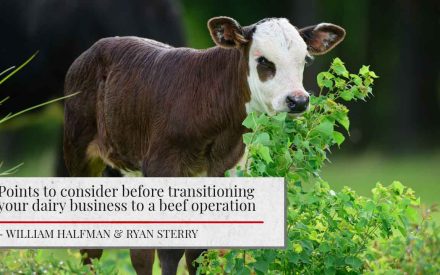
  • 🎧 LISTEN: Points to consider before transitioning your dairy business to a beef operation🎧 LISTEN: Points to consider before transitioning your dairy business to a beef operation
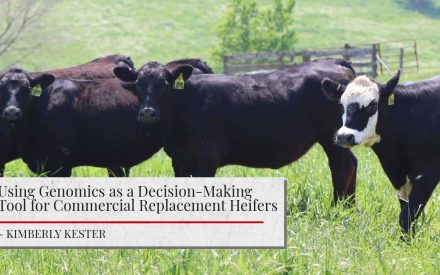
  • Using Genomics as a Decision-Making Tool for Commercial Replacement HeifersUsing Genomics as a Decision-Making Tool for Commercial Replacement Heifers
  • Remember Energy Needs During the Last TrimesterRemember Energy Needs During the Last Trimester
  • ▶️ Watch: Handling Facilities▶️ Watch: Handling Facilities

Division of Extension

Connecting people with the University of Wisconsin

  • Agriculture
  • Community Development
  • Health & Well-Being
  • Families & Finances
  • Natural Resources
  • Positive Youth Development

Agriculture at Extension

  • Animal Sciences
  • Crops and Soils
  • Dairy
  • Farm Management
  • Horticulture
  • Discovery Farms
  • Master Gardener
University of Wisconsin-Madison      |        Explore Extension: Agriculture Community Development Families & Finances Health Natural Resources Youth
Connect With Us
Support Extension
Extension Home

We teach, learn, lead and serve, connecting people with the University of Wisconsin, and engaging with them in transforming lives and communities.

Explore Extension »

County Offices

Connect with your County Extension Office »

Map of Wisconsin counties
Staff Directory

Find an Extension employee in our staff directory »

staff directory
Social Media

Get the latest news and updates on Extension's work around the state

facebook iconFacebook

twitter icon Follow on X


Facebook
Follow on X

Feedback, questions or accessibility issues: info@extension.wisc.edu | © 2026 The Board of Regents of the University of Wisconsin System
Privacy Policy | Non-Discrimination Statement & How to File a Complaint | Disability Accommodation Requests

The University of Wisconsin–Madison Division of Extension provides equal opportunities in employment and programming in compliance with state and federal law.