
Table of Contents
Introduction
Grazing cattle sounds so simple. The forage grows, the cattle eat the forage, and it all ends with a “happily ever after.” Unfortunately, it’s not as simple as it sounds. To maximize cattle performance while grazing, producers must pay attention to the forage itself and how it can affect the grazing animals.
Growth Stages of Forage
To begin, let’s break down forage growth into three stages. Understanding these is the first step in attaining effective grazing management. The three growth stages of forage are:
- Stage One: The plant must have time to rest and regrow. While in this stage, plants use carbohydrates that are stored in the roots to promote growth. This stage occurs right after grazing or clipping and can also occur when coming out of dormancy in the spring or with newly emerging grasses.
- Stage Two: The plant’s quality maximizes. Effective grazing management extends this phase as long as possible. Here, the plant has enough leaf surface area for photosynthesis, allowing it to grow without using carbohydrate reserves in the root.
- Stage Three: The plant begins reproduction and will start to set seed. At this point, the plant’s yield will be higher than ever, but the quality is low because of the higher fiber concentrations, lower crude protein, and higher stem-to-leaf ratios.
How Forage Growth Stages Influence Cattle
When cattle nutrition requirements aren’t met, performance is hindered, and profits are lost. Grazing cattle may need to be supplemented with additional feed to meet energy and nutrient needs when forage quality is poor or in short supply. When the quality of the forage is adequate, supplementation may not be needed, aside from mineral, and can help reduce production costs. Forage in stage two is ideal because it is more efficiently digested by the rumen. The higher forage quality results in maximum intake, which increases performance in the herd.
Forage in stage three is less ideal for grazing cattle because the fiber content is high and quality is lower, which slows digestion in the rumen and reduces available energy. Therefore, cattle will consume less, and their performance will decrease. Lastly, stage one is not ideal because when the grass is too short, cattle will struggle to consume enough forage to perform. Remember, cattle graze by wrapping their tongue around the grass and ripping it. In grazing situations where the grass is too short, it will be difficult for cattle to consume sufficient forage. Grazing forages too early and too short also stresses the plants and reduces long term productivity of the stand. Figure 1 provides a visual summary of how forage growth stages can influence cattle.
| Stage 1 | Stage 2 | Stage 3 | |
| Forage Growth Stage |
 |
 |
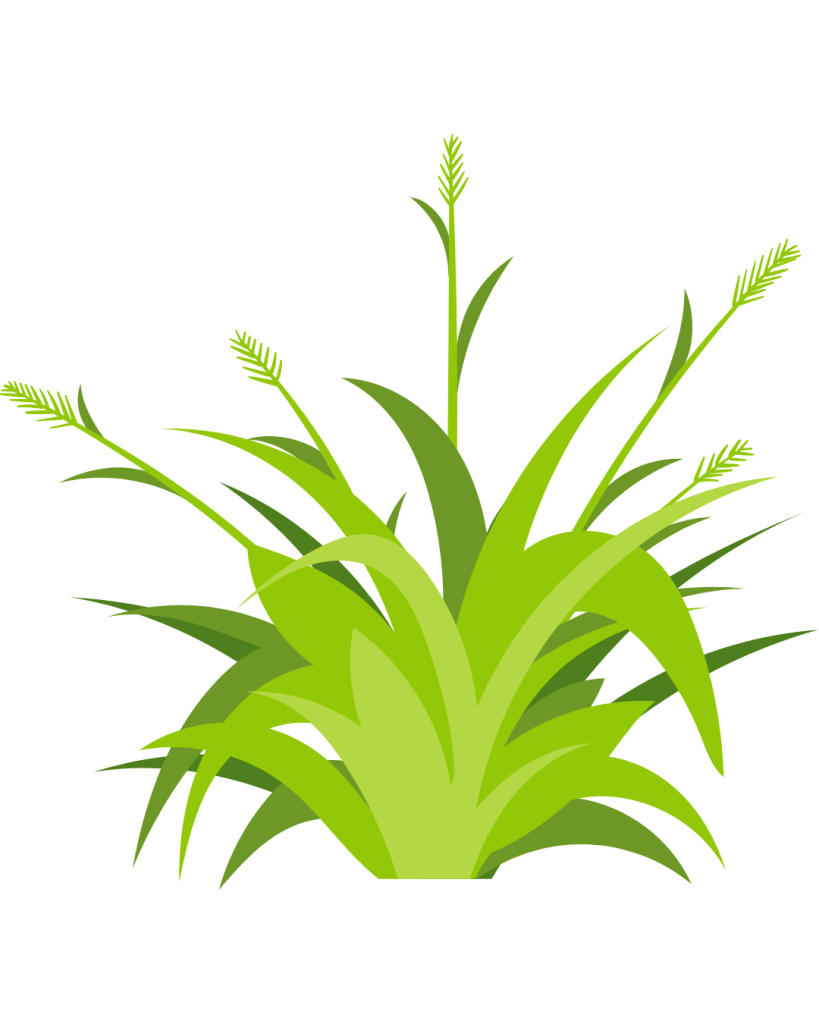 |
| How the Stage Influences Cattle | Cattle performance will decrease due to the low forage quantity and struggle to eat such short grasses due to their grazing style. | Cattle performance will be highest here! Forage quality is at it’s highest and cattle will get the most efficient use out of your pastures. | Cattle will reduce intake due to high fiber contents in the plant. The rumen digests this slower, leading to decreased performance. |
Figure 1
Other Benefits of Effective Grazing Management Strategies
Creating resilient plants is one of the largest benefits of effective grazing management. The best way to do this is to maintain energy reserves, often stored in the roots of plants. After cattle graze, the plant must use its stored energy to grow until the surface area of the leaves is large enough to photosynthesize enough energy on its own. If a plant does not have enough energy in the root reserves to grow, it will become stressed, weak, and die. Overgrazing can deplete the root energy reserves to a point where individual forage species struggle to persist, and entire pastures are left vulnerable to environmental stressors, such as extreme weather. Over time, the composition of stressed pastures will shift toward a lower quality forage, further perpetuating the problem. Managing to avoid overgrazing maintains high-quality forage for the long term.
Once you’ve fostered resilient plants through effective grazing management, some other benefits you will see include:
- Increased forage utilization
- More forage to be harvested for extreme weather months
- Maximized efficiency of pastures
- Better distribution of urine and manure
Summary
In the end, grazing management can help your cattle achieve maximum performance, increase the efficiency of your pastures, and, ideally, improve your bottom line. The best way to begin is to introduce short grazing periods and long periods of rest on your pastures. Utilizing a rotational-type grazing management strategy is one of the most common ways to do this. Although grazing cattle efficiently takes management and preparation, it just may lead to that “happily ever after.”
References
Melvin, K. and Mason, K. 2021. Grazing Management Principles for Beef Cattle. University of Tennessee Institute of Agriculture. https://utbeef.tennessee.edu/wp-content/uploads/sites/127/2021/11/W1030.pdf
Bates, G. 2022. Forage Management: Smaller Pastures = Better Pastures. University of Tennessee Institute of Agriculture. https://utbeef.tennessee.edu/forage-management-smaller-pastures-better-pastures/
National Academies of Sciences, Engineering, and Medicine. 2016. Nutrient Requirements of Beef Cattle: Eighth Revised Edition. Washington, DC: The National Academies Press. https://doi.org/10.17226/19014.
Reviewers
Bill Halfman
Beef Outreach Specialist
University of Wisconsin-Madison, Division of Extension
Jason Cavadini
Grazing Outreach Specialist
University of Wisconsin-Madison, Division of Extension
Author

Beth McIlquham
Beth McIlquham is a Regional Livestock Educator serving Crawford, La Crosse, Richland, and Vernon counties. She works alongside producers to provide livestock-related programming aligned with the needs of the area.