Article Contents
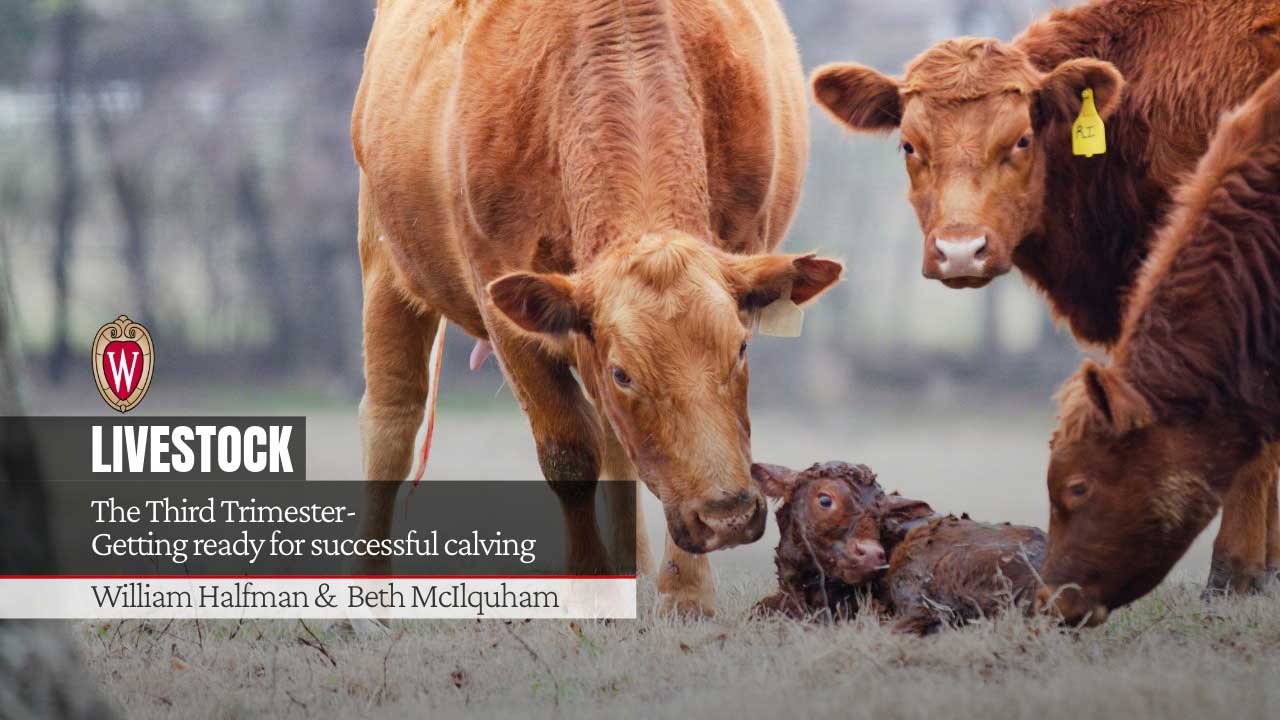
Management of the cow herd during the third trimester has implications for both the cow and the calf. When done correctly, it sets cows and calves up for success. On the other hand, there are consequences for poor management. Let’s start by taking a look at some of the challenges, potential negative outcomes, and importance of good management during this time.
During the third trimester, energy and protein needs increase as 75 percent of calf growth occurs during this time with about 60 percent occurring the last 60 days before birth. Final development of organs and tissue is also taking place. Failure to meet nutritional needs during this time has been shown to negatively impact weaning weights, steer offspring feedlot and carcass performance, and negatively impact heifer offspring reproductive performance. Cows will utilize fat reserves and atrophy muscle tissue to try to meet needs at the expense of their body condition during the third trimester if nutritional requirements are not met.
Colostrum production begins during the third trimester. Both quality and quantity of colostrum can be negatively affected by poor management. This in turn negatively impacts passive transfer of immunity and getting the calf off to a good start. Odde reported increased calf blood serum IgG levels as body condition increased, topping out at cow body condition score (BCS) of 5.
The third trimester is the last chance to add body condition before calving if cows are thin. Cows should have a (BCS) of 5, and heifers should have a BCS of 6 at calving. Houghton et.al reported longer post partem interval, and Kunkle et.al. reported longer calving intervals returning to lower pregnancy rates, lower rates of gain and weaning weights for cows with BCS of less than 5.
Let’s look at best management practices to help cows successfully navigate the third trimester and be set up for successful calving and re-breeding:
- Body condition score the herd at the beginning of the third trimester to determine the overall herd status. Identify underconditioned and over conditioned cows and consider separating them from the rest of the herd. Score the first and second calf cows separately as they are still growing themselves and have greater needs. Ideally, they are in their own group already to allow them to get what they need nutritionally while keeping costs low. Continue to monitor body condition score of the herd during third trimester to head off problems early.
- Test forages, if you have not already done so, to match forage and feed resources to the herd’s needs. Some of the forage inventory may meet cow needs without additional protein or energy supplementation. Don’t overlook vitamins (A and E in particular) and minerals. Use a reputable product, monitor consumption, and adjust as necessary to ensure sufficiency. Whether you formulate your own rations or work with a nutritionist, knowing what you have is necessary to meet cow needs and control costs.
- Make sure there is enough bunk space, so all cows can get to the feed. This is especially important if limit feeding supplemental protein or energy. If bunk space is lacking, cows that need it the most are most likely the ones being shorted.
- Pay attention to adverse weather conditions and adjust energy as necessary. Third trimester and cold wet conditions coincide for spring calving herds. An occasional day of adverse weather poses relatively low risk, but extended periods of adverse weather will take a toll. Shelter from the wind will also be beneficial.
Summary
Implementing a plan to help the herd successfully navigate the third trimester sets the cows up for successful calving and rebreeding, and starts the calves off on the right foot. Not doing so negatively impacts the cow and calf performance both short and long term.
Author

William Halfman
Beef Outreach Specialist – Bill’s educational programming has focused on beef cattle production and management, agronomic crops and soils production and management, small scale fresh market and bedding plant production, and specialty crop management.

Beth McIlquham
Beth McIlquham is a Regional Livestock Educator serving Crawford, La Crosse, Richland, and Vernon counties. She works alongside producers to provide livestock-related programming aligned with the needs of the area.
Published: December 17, 2025
Originally Published: Wisconsin Cattlemen’s Association “Cattle Trails” December 2025 ↗️
Reviewed by:
1. Adam Hartfiel, Regional Livestock Educator at the University of Wisconsin–Madison Division of Extension
2. Ryan Sterry, Regional Livestock Educator at the University of Wisconsin–Madison Division of Extension
References
- Houghton, P & Lemenager, Ronald & Horstman, LA & Hendrix, Karrington & Moss, G. (1990). Effects of body composition, pre-and postpartum energy level and early weaning on reproductive performance of beef cows and preweaning calf gain. Journal of animal science. 68. 1438-46. 10.2527/1990.6851438x.
- Kunkle, W.E., R.S Sand, D.O. Rae, Effect of Body Condition on Productivity in Beef Cattle, Chapter in Book by Fields, M.J., & Sand, R.S. (Eds.). (1993). Factors Affecting Calf Crop (1st ed.). CRC Press. https://doi.org/10.1201/9781003069119
- Odde, K.C., Survival of the Neonatal Calf, Veterinary Clinics of North America: Food Animal Practice, Volume 4, Issue 3, 1988, Pages 501-508, ISSN 0749-0720, https://doi.org/10.1016/S0749-0720(15)31027-6.