Skip to content
UW Crest

Livestock

Division of Extension

  • Topics
    • Meat
    • Beef
    • Beef x Dairy
    • Poultry
    • Swine
    • Small Ruminants
    • Decision Tools and Software
  • 🗓️ Livestock Events
    • Event Calendar
    • Driftless Region Beef Conference
    • Farm Ready Research
  • News
  • Programs
    • Beef Roundup Webinar Series
    • Master Meat Crafter Training Program
    • Small Ruminant Webinar Series
    • Wisconsin Youth Livestock
  • Articles
  • People
  • About
    • Our Impacts
  • Contact Us
Search
University of Wisconsin-Extension
Articles > Poultry

Where to find and how to raise layer chicks

Written by David R. Laatsch
Share
  • Share:
  • Share on Facebook
  • Share on X (Twitter)
  • Share via Email
  • Copy Link

Copied!

Article Series

  • Ready-To-Lay Pullets and Eggs as 4-H or FFA Projects
  • Origin and History of the Chicken
  • Judging Ready-to-Lay Pullets
  • Exhibiting Eggs as a 4-H or FFA Project

Sources of Layer Chicks

There are many sources chicks that will grow into ready-to-Lay pullets for your fair project. Local and mail order hatcheries purchase their chicks from large commercial hatcheries and divide them into small lots for the project member.

Tractor Supply, Fleet Farm, and Farm and Fleet stores as well as many hardware and feed stores have “Chick Days” when you can purchase chicks. Mail order hatcheries including Stromberg’s, Purely Poultry, Sunnyside, Cackle and Abendroth’s handle excellent quality chicks.
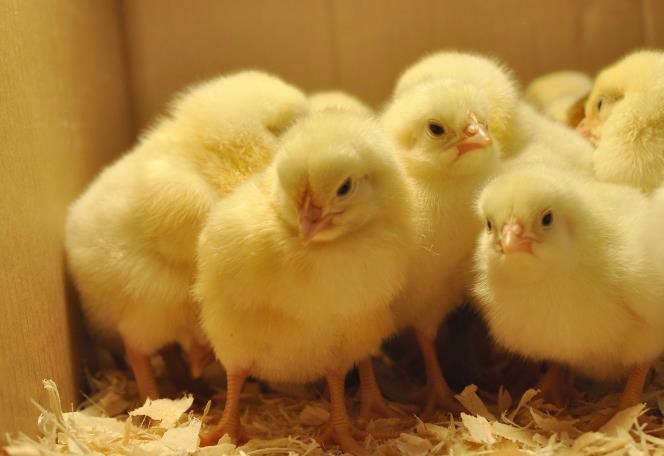
Cute, fluffy, yellow hybrid chicks will grow rapidly.

Study the lines that are available and purchase according to price and availability on the day that you need them. Most layers are only available as pullets because the cockerels are not needed and are not efficient meat birds.

Layer Pullets begin to lay at 18-20 weeks of age. So, calculate 5 months prior to your fair for delivery of your chicks. Place your order at least one month before delivery to insure your desired date.

Hybrid layer chicks will be referred to as White or Brown. They may have a hybrid number or a specific name to identify the line.

White Layers are yellow as chicks and may have a spot or two of black. They grow into a “Leghorn type” pullet, but should never be exhibited as a purebred Leghorn! They are hybrids, not purebreds!

Browns are light buff or red as a chick. They may have variety names such as Cinnamon Queen, Pumpkin Red, Golden Comet, Red Stars or Gold Sex-Link. These birds should never be exhibited as purebred New Hampshire or Rhode Island Reds! The lack the correct size, color and body shape to be shown as purebreds!
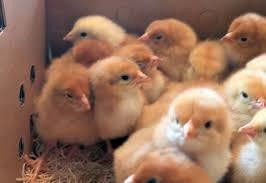
Healthy chicks are bright-eyed and perky! They make a brisk, sharp “cheep, cheep” sound.

Combine your order with other project members and even farm-market growers because the larger the order, the lower the price per chick. This is also a way to get to know other producers and to learn from their expertise.

Save the paper work that comes with your chicks! This will include an National Poultry Improvement Plan (NPIP) certificate which will be necessary along with your U.S.D.A. premise ID number at check-in at your county fair.

Keep accurate financial records of your project and have someone take photos of you performing skill tasks with your birds for your record book. They grow fast. You can’t recreate skills with chicks when they’ve already grown.

Raising Layer Chicks

Rear your chicks as described in the “Raising Broiler” information packets. Besides the proper temperature, remember F.L.A.W.S.

Feed must be fresh and nutritious. Commercially produced feed is a little expensive, but will produce great results. Follow the feeding instructions on the bag. A coccidiostat such as amprolian is recommended for birds that free range. A pullet should grow from chick to 18 weeks by consuming 10-12 pounds of feed.

Light stimulates growth and reproductive development. Small brooders are heat with light bulbs, but 16 hours of light should be provided per day as they grow.

Fresh Air is provided by good ventilation. Prevent over-crowding! If the coop has an odor, it lacks ventilation! Your pullets may be free ranged as soon as the weather permits.

Water is the most often neglected nutrient, yet the least expensive! Fresh water should be provided at all times.

Security means protection from predators such as hawks, raccoon, fox and opossums as well as Biosecurity.

Print This Page

Author

More from David R. Laatsch

Wisconsin Youth Livestock Programs

The Wisconsin Youth Livestock Program provides youth and adults the teaching tools to become successful in their 4-H/FFA project areas.

Learn more

Latest Articles

  • Introduction to Raising Healthy Sheep (A3858-02)
  • Livestock Risk Protection Insurance: A Tool to Help Manage Risk
  • Shearing Day Preparation and 2026 Sheep Shearers Directory
  • Remember Energy Needs During the Last Trimester

You May Also Like

  • Finding a Veterinarian for your ChickensFinding a Veterinarian for your Chickens
  • Exhibiting Eggs as a 4-H or FFA ProjectExhibiting Eggs as a 4-H or FFA Project
  • Judging Ready-to-Lay PulletsJudging Ready-to-Lay Pullets
  • Origin and History of the ChickenOrigin and History of the Chicken

Division of Extension

Connecting people with the University of Wisconsin

  • Agriculture
  • Community Development
  • Health & Well-Being
  • Families & Finances
  • Natural Resources
  • Positive Youth Development

Agriculture at Extension

  • Animal Sciences
  • Crops and Soils
  • Dairy
  • Farm Management
  • Horticulture
  • Discovery Farms
  • Master Gardener
University of Wisconsin-Madison      |        Explore Extension: Agriculture Community Development Families & Finances Health Natural Resources Youth
Connect With Us
Support Extension
Extension Home

We teach, learn, lead and serve, connecting people with the University of Wisconsin, and engaging with them in transforming lives and communities.

Explore Extension »

County Offices

Connect with your County Extension Office »

Map of Wisconsin counties
Staff Directory

Find an Extension employee in our staff directory »

staff directory
Social Media

Get the latest news and updates on Extension's work around the state

facebook iconFacebook

twitter icon Follow on X


Facebook
Follow on X

Feedback, questions or accessibility issues: info@extension.wisc.edu | © 2026 The Board of Regents of the University of Wisconsin System
Privacy Policy | Non-Discrimination Statement & How to File a Complaint | Disability Accommodation Requests

The University of Wisconsin–Madison Division of Extension provides equal opportunities in employment and programming in compliance with state and federal law.