Introduction
Reproduction is key to profitability in beef cow-calf operations. When cows fail to conceive and calve on a yearly basis, producers lose both potential calf sales and the resources invested in maintaining that cow. Reproductive failure remains the leading cause of early culling in beef herds.
As your herd transitions into breeding season, there’s a lot to prepare for, such as ensuring herd sires have passed a breeding soundness exam and cows are at an adequate body condition score.
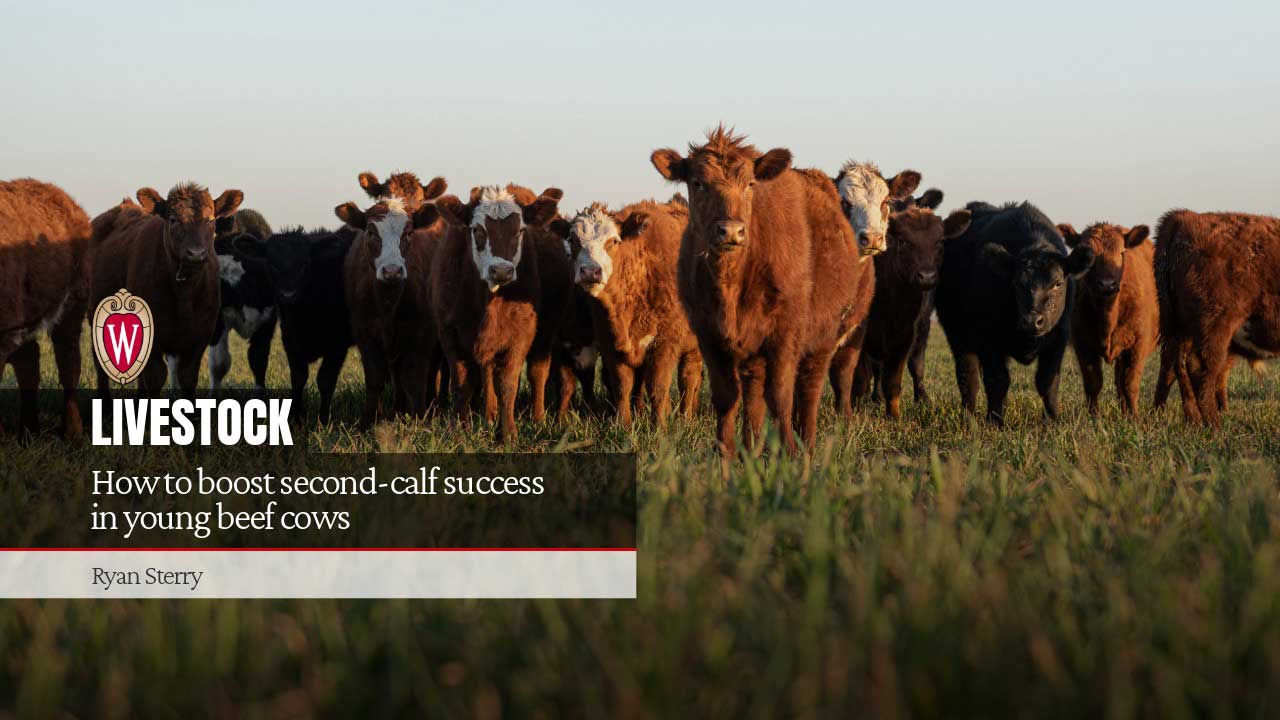
Another consideration, at times overlooked, is the unique challenges first-calf heifers face in conceiving their second calf. Two-year-old heifers are learning to be mothers for the first time and have different nutritional needs than mature cows.
Fortunately, there are steps producers can take to better position young cows for success.
How to manage for long-term productivity
Success in the second breeding season begins with good management in the first.
Selecting older heifers for replacements increases the likelihood that they will reach puberty sooner and conceive earlier in the first year. Breeding heifers to calve a few weeks ahead of the adult cow herd offers several advantages, one of which is allowing more days to recover before entering their second breeding season. While beef cows can cycle and conceive 50 to 60 days after calving, it is common for first-calf heifers to take around 10 days longer.
Incorporating early pregnancy diagnosis enables producers to identify replacement heifers that are open or conceived late. Non-pregnant heifers can often be marketed in time as heavy feeders. However, open 2-year-olds face greater depreciation losses, as they will likely be sold as market cows.
Placing selection pressure on replacement heifers by implementing a shorter defined breeding season, such as 45 days, can help identify heifers with lower fertility or those mismatched to the environment while maintaining greater market value than they would as open 2-year-olds.
Nutritional management for young cows
Two-year-old heifers are still growing and have less rumen capacity in addition to the demands of lactating. Young cows may benefit from slightly more nutritionally dense rations, higher-quality forages and well-managed pastures due to their lower feed capacity.
Biology dictates that the nutritional hierarchy prioritizes lactation and the cow’s own maintenance before reproduction, which includes the ability for the cow to resume cycling.
One step producers can take is to manage their replacement heifers to calve at a body condition score of 6, or 1 point higher than mature cows. Two-year-olds may need to be grouped separately at times to ensure all can access the feed bunk or to accommodate a different supplementation strategy.
Take a look at breeding decisions
Calving difficulty not only becomes a frustration during calving season but also contributes to delayed cycling and poorer reproductive performance.
Incorporating calving ease into heifer mating decisions can help reduce this problem. Young, thin or late-calving cows are less likely to return to cycling by the start of the breeding season.
Ideally, a sound year-round management plan minimizes the number of these cows. However, if you find yourself at the beginning of the breeding season with these challenges, management can make a decision to intervene now using tools from the reproduction tool kit.
For example, incorporating synchronization protocols using controlled internal drug release (CIDR) inserts containing progesterone are effective at inducing estrus in non-cycling cows.
Summary
Despite our best efforts, it’s inevitable for some 2-year-old cows to leave the herd. However, it’s management’s responsibility to ask why when they do.
Young cows that fail due to environmental mismatch, calving difficulty or inadequate nutrition highlight opportunities for improvement in management and replacement heifer selection.
References
- Funston RN, Musgrave JA, Meyer TL, Larson DM. Effect of calving distribution on beef cattle progeny performance. J Anim Sci. 2012 Dec;90(13):5118-21. doi: 10.2527/jas.2012-5263. Epub 2012 Aug 7. PMID: 22871928.
- Johnson, S. K., et al. “Protocols for Synchronization of Estrus and Ovulation.” Proceedings, Applied Reproductive Strategies in Beef Cattle, 15–16 Oct. 2013, Staunton, VA.
- Halfman, William. “Don’t Overlook Nutritional Needs of 2-Year-Old Cows.” University of Wisconsin–Madison Division of Extension, Livestock Program, https://livestock.extension.wisc.edu/articles/dont-overlook-nutritional-needs-of-2-year-old-cows/. Accessed 3-25-2026.
- U.S. Department of Agriculture, Animal and Plant Health Inspection Service, Veterinary Services, National Animal Health Monitoring System. 2021. “Beef 2017, Report 2: Beef Cow-Calf Management Practices in the United States,” U.S. Department of Agriculture, Animal and Plant Health Inspection Service, Riverdale Park, MD.
- Wilke, Karla, and Kacie McCarthy. “Chasing the Elusive Second Calf.” UNL BeefWatch, 4 Mar. 2024, https://beef.unl.edu/beefwatch/2024/chasing-elusive-second-calf/. Accessed 3-23-2026.
Originally Published: April 2026
Authors
- Ryan Sterry – Regional Livestock Educator, University of Wisconsin-Madison Division of Extension
Reviewed by:
- Bill Halfman – Beef Outreach Specialist, University of Wisconsin-Madison Division of Extension
- Beth McIlquham – Regional Livestock Educator, University of Wisconsin-Madison Division of Extension