At a Glance
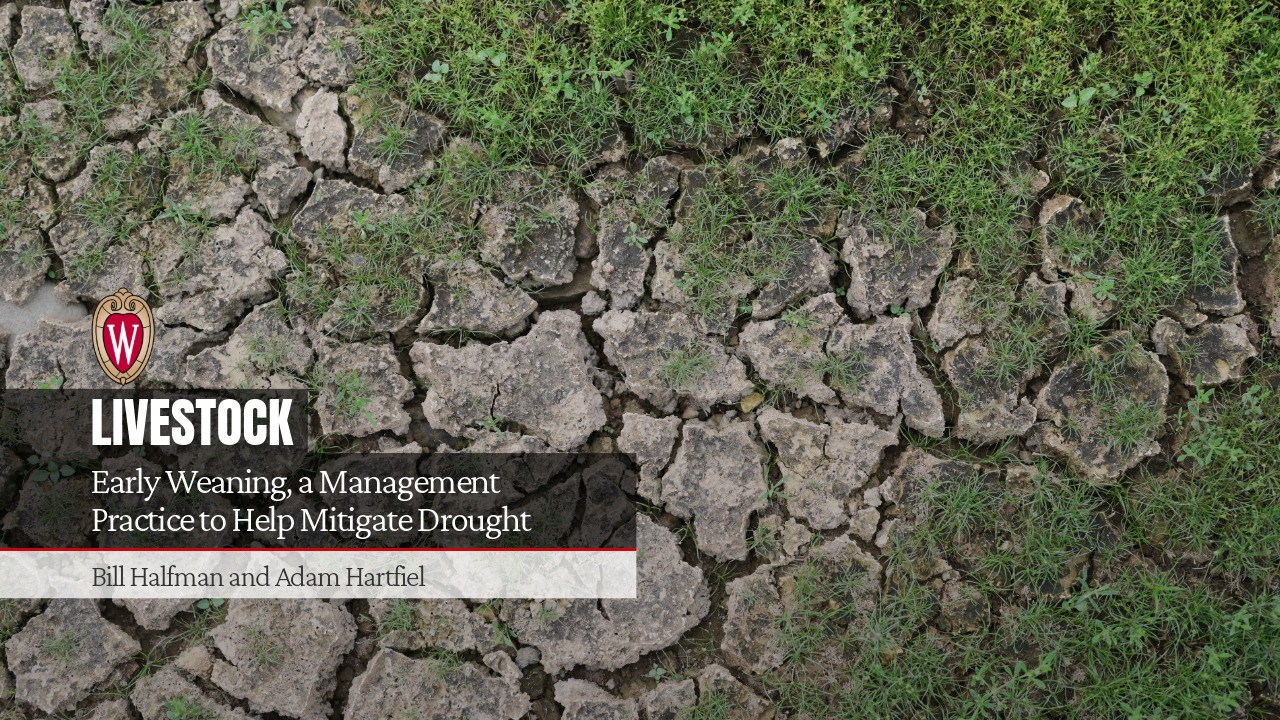
Drought severely reduces pasture availability, threatening beef herd productivity and cow body condition. Early weaning reduces a cow’s energy demands and intake. This strategic intervention can help maintain cows’ body condition , may extend the time cows can graze available pasture and allows producers to target high-quality feeds directly to calves.
What is the primary impact of early weaning on herd productivity and pasture preservation?
Early weaning reduces a cow’s nutrient requirements helping extend pasture and harvested forages during severe droughts. Eliminating the energy required for lactation allows cows to maintain Body Condition Score (BCS), safeguarding re-breeding success and future calf crops. Additionally, targeting expensive high-quality feeds directly to weaned calves yields higher feed conversion efficiency than feeding the entire lactating herd.
What key management and housing strategies ensure successful early weaning?
- Facilities Adjustment: Provide feed bunks with maximum 18-inch throat heights, 8-inch depths, and 18 inches of linear space per head. Place bunks and waterers along pen perimeters so calves encounter them while walking fences.
- Pen Density: Allocate roughly 100 square feet per head to limit excessive walking and stress before expanding pen size after acclimation.
- Nutritional Preparation: Implement 3 to 4 weeks of pre-weaning creep feeding using post-weaning feedstuffs to ease bunk transition and stabilize intake.
Introduction
When pasture is in short supply due to lack of rainfall, early weaning is an option that can help stretch what pasture is available and keep animals in good condition. Spring-born calves are typically weaned at 6-7 months old (180-200 days of age) or around September-November depending on when they were born. In extreme cases, weaning can occur as early as 30-45 days of age and would require more intensive management. By the time calves are 90 to 120 days old, they are getting half or more of their daily feed from forage, making early weaning at that age (or later) less stressful than at earlier ages. When pastures are unable to meet forage needs, weaning even a month or two early can extend available pasture for the cows and help keep them in good body condition more efficiently than feeding the herd with calves at side. Early weaning does come with more extensive management but can be a viable option when considering both short and long-term benefits for the cows and calves. The following are some of the reasons early weaning can be a good option.
Herd Management Considerations
A dry cow’s energy and protein needs are about 20 percent lower than during late lactation. Because of this physiological response, feed intake of a dry cow is reduced by approximately 15 percent. This results in dry cows being able to stay in good condition on low quality forage, and eat less, helping extend pasture resources. If cows have become too thin, this is an easier time to add condition. Cows losing enough condition (less than BCS 4), will likely have reduced milk production, negatively affecting the calf at her side as well as the developing fetus. Cows that lose condition due to unaddressed drought-related pasture shortages during breeding season, may also have reduced pregnancy rates.
Feeding weaned calves is more efficient than having cows convert feed to milk for the calves to nurse. This becomes economically relevant because feeding harvested or purchased feed is substantially more expensive than letting cows graze the forage themselves during normal conditions. By late summer, spring-born calves are often eating close to half the amount of forage their mothers do. By weaning and removing the calves early, the available pasture will last longer for the dry cows. Cows can then graze what is available or be fed low quality forages to maintain adequate condition. High quality forages or feedstuffs can then be fed to the calves rather than feeding a greater amount of feed to the entire herd. Even with early weaning, care must be taken to avoid overgrazing as overgrazing pastures during drought has long-term consequences for pasture productivity ↗️.
Good management is critical to helping calves adapt to their new environment as quickly as possible. Work with your veterinarian to determine what preconditioning or preparation steps should be completed prior to weaning and develop a plan to manage any outbreaks of illness following weaning. Low stress handling and daily health monitoring are two simple ways to get started.
Housing Considerations
Pens that are designed for 500-pound calves and larger may not work well for smaller calves. For early-weaned calves, bunks should have a throat height of no more than 18 inches, and a bunk depth of 8 inches or less so younger calves can reach the feed. Waterers need to be of similar dimensions with additional waterers provided as necessary to prevent dehydration. Young calves typically like to eat as a group, so it is recommended to provide 18 inches of linear bunk space per head to allow all calves to get to the bunk at the same time. Providing adequate bunk and waterer space is important to help reduce the risk of more aggressive calves over-eating and ensure more timid calves get sufficient feed and water. Additionally, it is critical to make sure feed and water are easy to find in the pen. To help with this, bunks and water tanks can initially be placed on the perimeter of the lot so calves can find them when they walk the fence.
For small calves, approximately 100 square feet per head of pen space is recommended to help reduce excessive walking and help them become more familiar with their new home. The area can be increased a week after weaning, or after the calves have settled down and acclimated. A clean place to lay down with good ventilation is critical to help reduce risk of sickness during this stressful time. Calves should also have access to shade if heat stress is a concern. Fences should be double checked as small calves can be hard to keep in.
Calf Ration Considerations
Short-term creep feeding (3-4 weeks) prior to weaning can help calves learn to eat from a bunk and adjust to new feedstuffs. Ideally feeding the same feedstuffs they will receive after weaning can help transition to a full diet after they are weaned.
Keeping calves eating post-weaning is vital for growth performance success. At weaning, calves should be provided good quality grass hay. Long stemmed, grass hay, harvested in late vegetative through early reproductive stage, is very palatable and will encourage calves to eat, which is critical to maintain a healthy rumen environment. Late cut, coarse hay is better fed to the cows at this time. It may be necessary to unroll round bales as younger calves may not be able to pull feed from tighter wrapped bales.
Concentrates should be introduced slowly and gradually increased over time. Introduce concentrate feeds at approximately one pound per head per day (or 0.75% of body weight on a dry matter basis) on the first day and slowly work up to 1 to 1.5% of body weight on a dry matter basis. This should be done over 10 to 14 days and may take a little longer depending on how calves respond. Slow and steady is better than too fast to prevent digestive upset. Feed can continue to be increased until intake has leveled off between 2 and 2.5% of their body weight on a dry matter basis.
Highly palatable feeds encourage calves to eat and will lead to more consistent intakes. Feed that is too dusty or includes fine particle sizes is not recommended for newly weaned calves and may cause digestive upset. Binders such as molasses or other sweet liquids can act as an attractant and dust eliminator if needed.
Feeding twice a day at initial weaning provides an opportunity to look for sick calves and reduces the risk of overeating while maintaining a more stable rumen environment. Include minerals and vitamins such as vitamin A, D, E that meet calf requirements in the grain mix or provided free choice.
Homegrown feeds can be used as primary ration ingredients, but some supplemental protein may be needed. Coproduct feeds such as dried distillers grains and corn gluten feed are high in bypass protein, which can be beneficial to young calf rations. They are also low in starch and high in energy from highly digestible fiber, which can also reduce the risk of digestive upset. Work with a nutritionist as needed to formulate rations.
It is important to remember that these smaller calves cannot eat as much as larger calves but are rapidly growing muscle and frame during this time. As such, dietary protein requirements for the small calf will be higher.
A reasonable target for calf rate of gain is around 2 pounds per day, which should support adequate muscle and bone growth and minimize risk of calves getting too fat.
Table 1. Nutrient requirements for calves of various weights to achieve 2.0 lb day gain1.
| Calf weight | 300 lb | 400 lb | 500 lb |
|---|---|---|---|
| Dry matter lb./day | 8.6 | 10.7 | 12.6 |
| Ration nutrient density, dry matter basis | |||
| Crude protein, % | 16.2 | 14.1 | 12.9 |
| NEg, Mcal/lb | 0.42 | 0.42 | 0.42 |
| TDN, % | 68 | 68 | 68 |
| Ca, % | 0.8 | 0.63 | 0.53 |
| P, % | 0.36 | 0.3 | 0.26 |
| Daily animal requirements | |||
| Lb Crude protein/day | 1.4 | 1.51 | 1.63 |
| Mcal NEg/ day | 1.8 | 2.23 | 2.64 |
| TDN, lb/day | 5.8 | 7.3 | 8.6 |
| Ca, gr | 32 | 32 | 32 |
| P, gr | 14 | 14 | 14 |
Take Home Messages
Early weaning serves as a useful management strategy during times of pasture shortages and forage availability. This management strategy can ease the nutritional demand on cows, saving body condition, and may extend pasture resources for a short period of time without overgrazing. Managing newly weaned calves requires intense management, carefully balanced high-protein rations, and close health monitoring, but will pay off by protecting long-term herd health and productivity. Early weaning may not be an option for every operation, but it can certainly be a consideration when pastures are running short.
References
- “Early Weaning Beef Calves.” Ag Hub, NDSU Agriculture, North Dakota State University, https://www.ndsu.edu/agriculture/ag-hub/ag-topics/livestock/beef/breeding-genetics/early-weaning-beef-calves.
- Lundy, E., C. Clark, D. Loy, “Early Weaning in Drought Conditions.” Iowa Beef Center, Iowa State University Extension and Outreach, https://iowabeefcenter.org/information/EarlyWeaningDrought.pdf.
- Grussing, T., E. DeHaan. “Resources for Early Weaning Beef Calves.” SDSU Extension, South Dakota State University, 22 July 2026, https://extension.sdstate.edu/resources-early-weaning-beef-calves.
- Houghton, P. L., et al. “Effects of Body Composition, Pre- and Postpartum Energy Level and Early Weaning on Reproductive Performance of Beef Cows and Preweaning Calf Gain.” Journal of Animal Science, vol. 68, no. 5, 1990, pp. 1438–1446. https://doi.org/10.2527/1990.6851438x.
- Lalman, D., A. Holder, Nutrient Requirements of Beef Cattle E-974, Oklahoma State University, 2025, https://extension.okstate.edu/fact-sheets/nutrient-requirements-of-beef-cattle
- Meyer, T. L., K. Wilke. “Early Weaning Strategies for Challenging Forage Conditions.” UNL Beef, Nebraska Extension, University of Nebraska–Lincoln, 1 July 2026, https://beef.unl.edu/early-weaning-strategies-challenging-forage-conditions/.
Originally Published
August 2026
Authors
- Bill Halfman – Division of Extension, University of Wisconsin–Madison
- Adam Hartfiel – Division of Extension, University of Wisconsin–Madison
Reviewers
- Christopher Clark, DVM – Iowa State University Extension and Outreach
- Erin DeHaan, Ph.D – South Dakota State University Extension